Tangles steal length quietly: rough pulls snap strands, spike frizz, and fast-track split ends. If you're building or fixing a long hair care routine (or searching “how to take care of long hair”), gentle detangling is your best defense—keep what you've grown.
Core rule: Slow + maximum slip + ends-to-roots = minimal damage.
Pain or snapping = breakage, not progress.
This leaf page fits our Long Hair Care cluster:
- Full schedule → Long Hair Care Routine
- Damage prevention → Prevent Frizz & Damage
- Long-term habits → Long Hair Maintenance
- Low-friction styles → Long Hair Styles
Jump to: Why tangles happen · 30-second decision · Step-by-step · Tools · Matted knots · Habits · FAQ
Why Long Hair Tangles So Easily
More length = more rubbing and snagging—especially at the oldest, driest ends.
Common triggers:
- Friction (cotton pillowcases, towels, collars, backpacks)
- Dryness / rough cuticles
- Split ends catching strands
- Wind/humidity/movement
- Buildup (sticky strands)
- Poor technique (roots-to-ends, dry with no slip)
Result: strands loop → knots tighten → you pull → breakage + frizz.
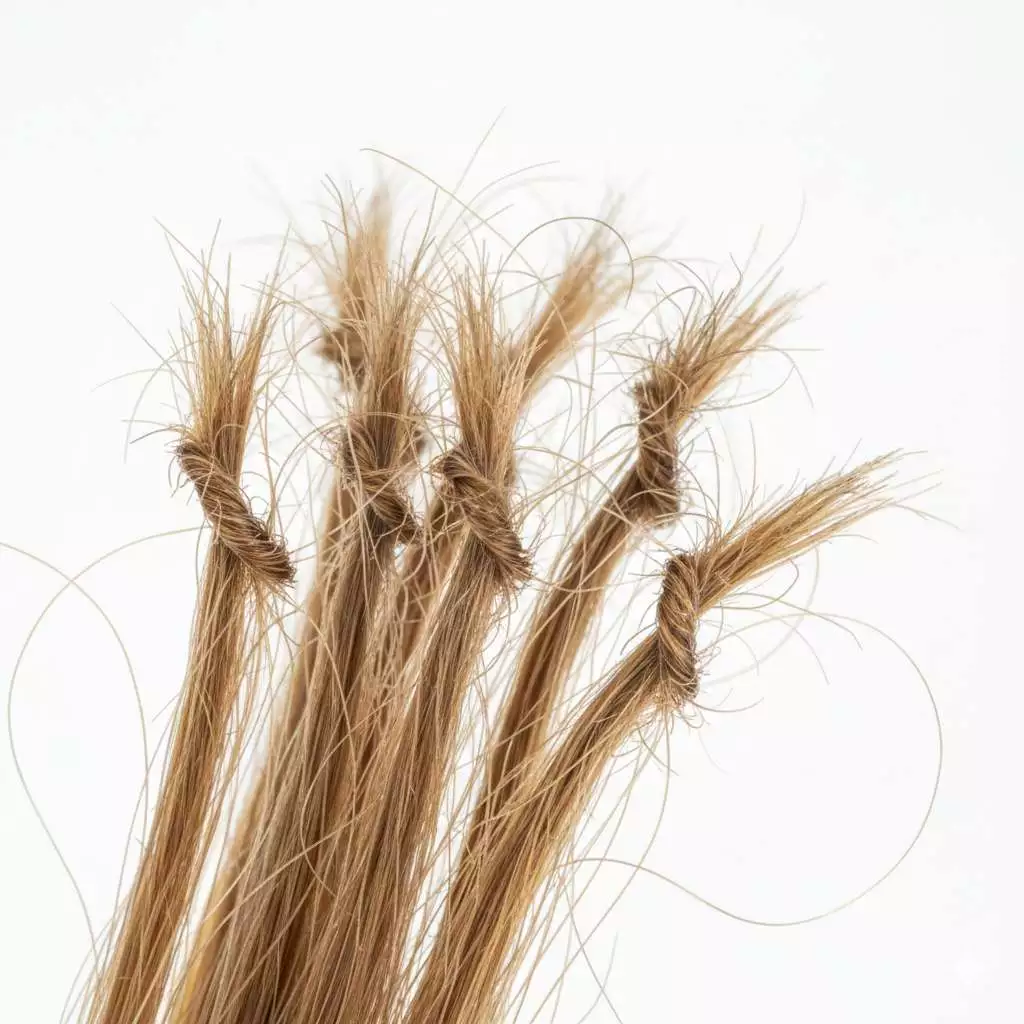
If knots repeat in the same spot, check your ends first → Prevent Frizz & Damage
30-Second Decision: What to Do Right Now
Quick triage before touching hair:
- Squeaky/dry feel? Add slip (conditioner/leave-in/mist)—never start dry.
- Small end knots? Section + fingers first, then ends-up with a tool.
- Post-shower wet? Only with slip + light pressure (wet hair is delicate).
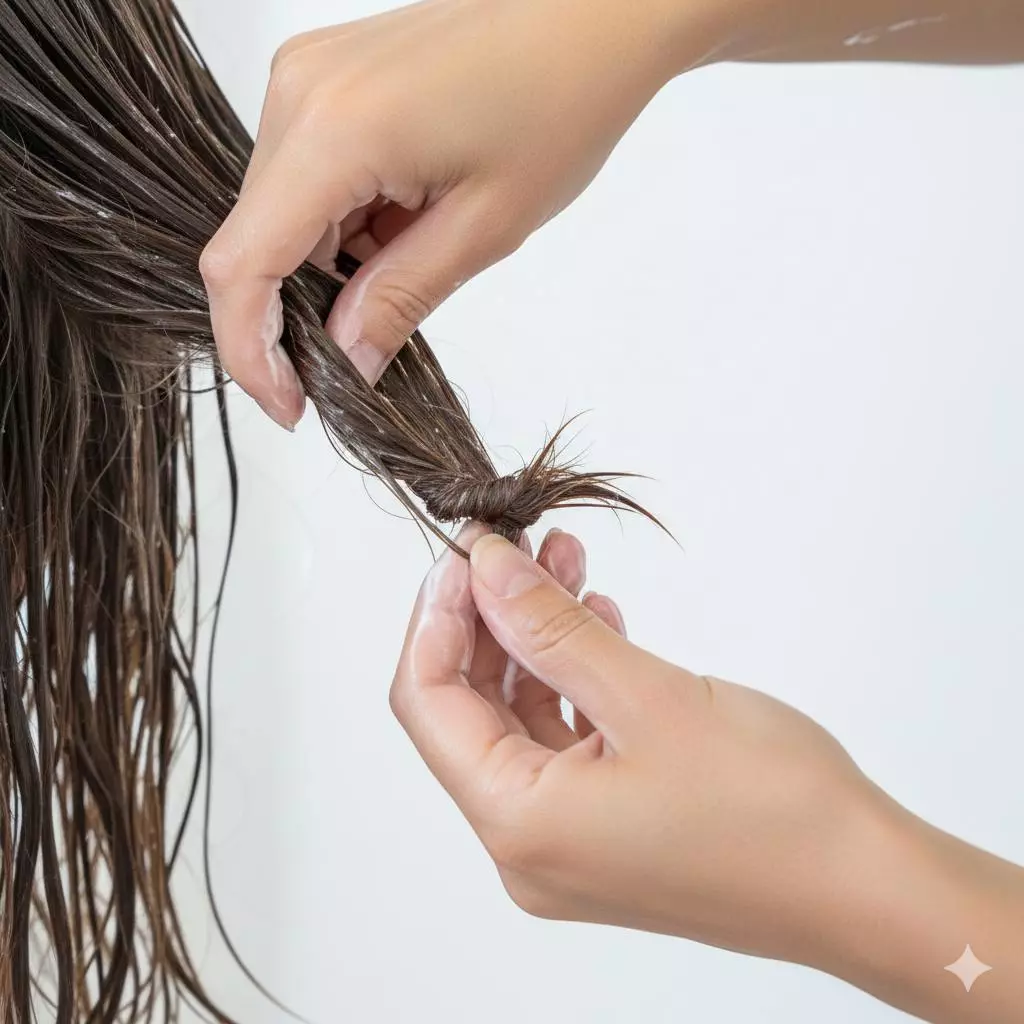
- Matted clump? Soften and wait 5–15 min → peel from edges in tiny sections.
- Retangles fast? Reduce friction overnight → Long Hair Maintenance
- Not sure what tool to use? Start with fingers → wide-tooth comb; use a flexible brush only after ends glide smoothly.
Wet vs Dry Detangling: Pros & Cons
Wet (conditioner/leave-in)
Best for: wash day, dense tangles, most straight/wavy hair
Pros: maximum glide; knots release easier
Watch-outs: hair is more fragile wet—go extra slow, never force through resistance
Dry (mist + leave-in/serum)
Best for: daily touch-ups, light knots, some curly/wavy routines
Pros: convenient; can reduce over-manipulation in the shower
Watch-outs: static/frizz without enough slip—mist is required
Quick rule: wash day = wet + heavy slip. Daily maintenance = mist + slip + small sections.
Step-by-Step: How to Detangle Long Hair
- Prep slip
Conditioner/mask mid-ends (wet) or mist + leave-in (dry). Wait 2–5 minutes. - Section & protect
Split into 2–6 sections. Hold above the knot so you’re not yanking from the scalp. - Ends-up, slow
Fingers loosen first → tool starts at the last 2–3 inches. Move up only when smooth. - Finish
Gentle rinse (wet). Post-wash: a small leave-in on mid-ends; optional tiny seal on the last inches.
Golden rule: no snapping, no pain, no rushing.
Best Tools for Detangling Long Hair
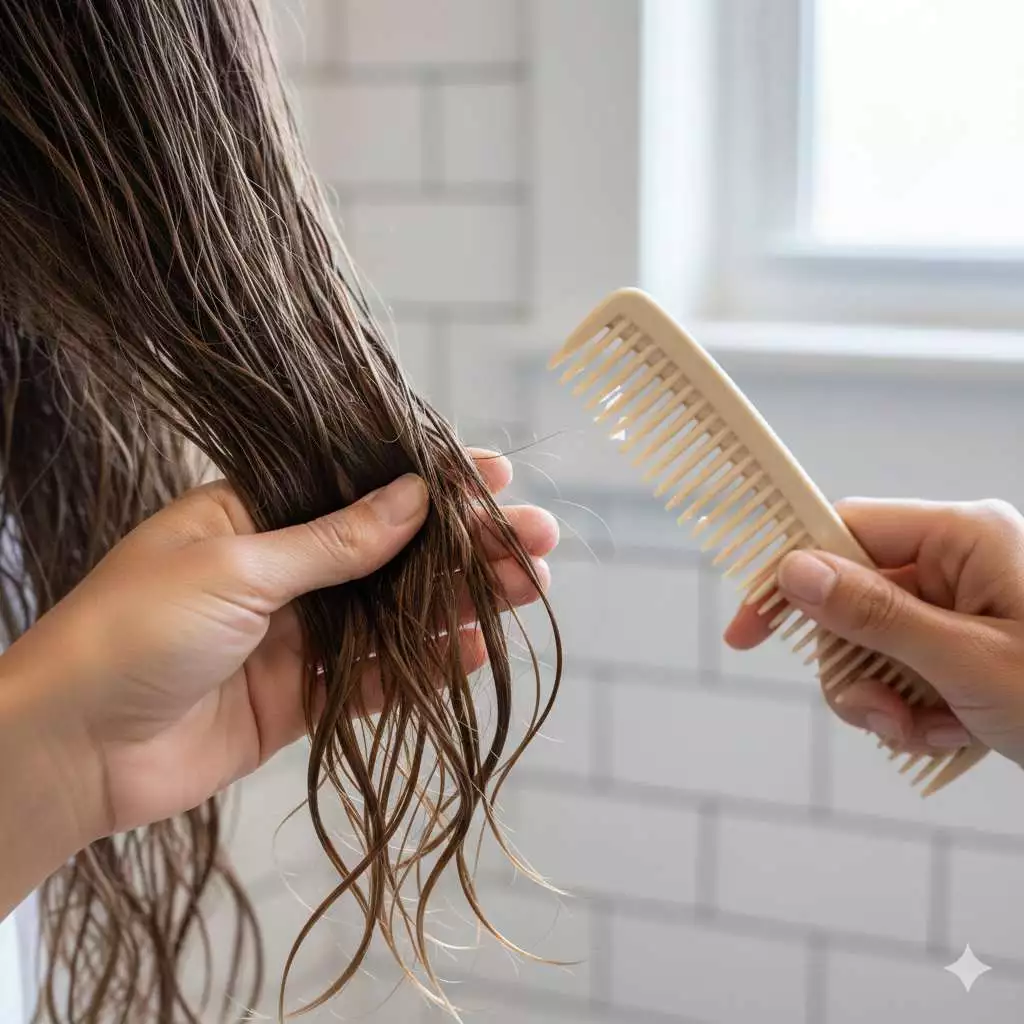
- Fingers — first pass; feel tension, zero pull
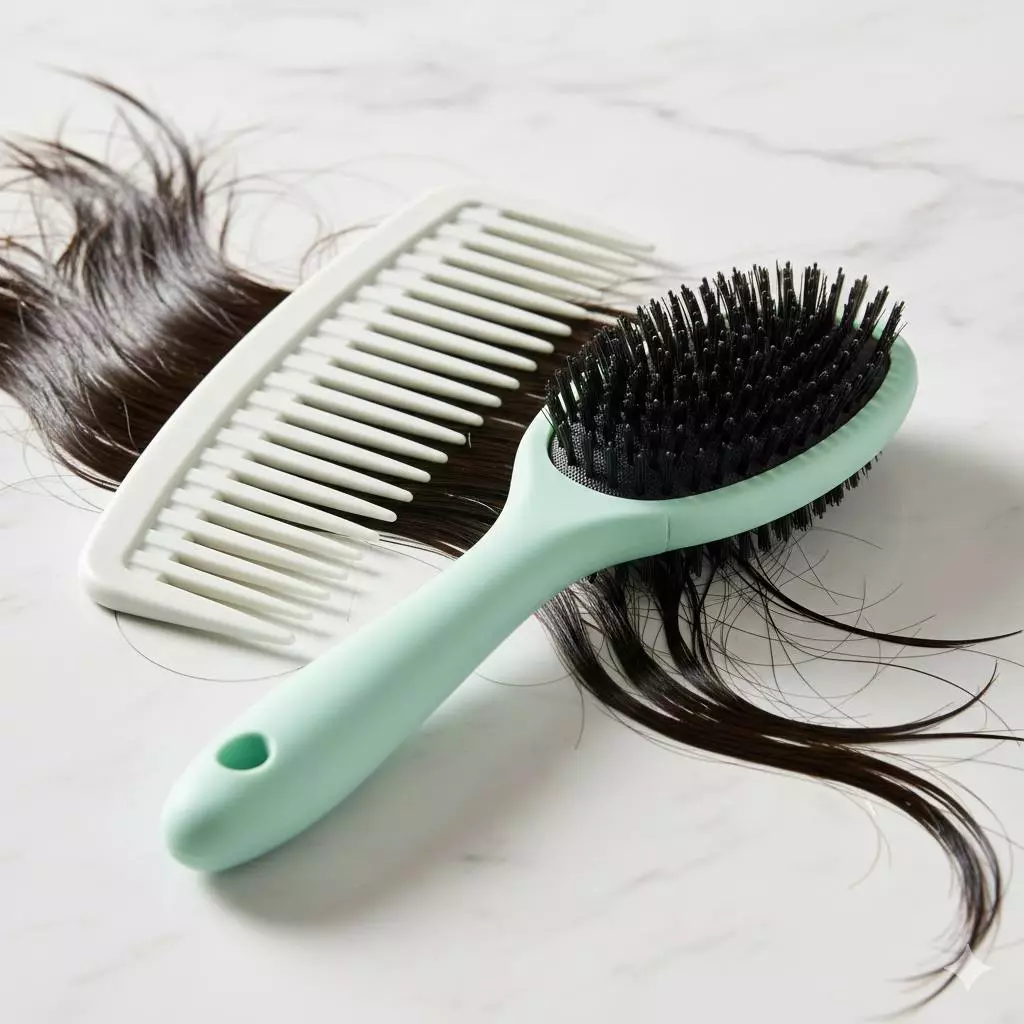
- Wide-tooth comb — wet/conditioned ideal; low snag
- Flexible detangling brush — daily with slip; fast, always ends-first
- Avoid early: fine/stiff brushes (high friction on knots)
Keep tools clean: product buildup on brushes/combs can make hair feel sticky and tangle faster. A quick wash and dry can restore glide.
Extensions? Use smaller sections and hold hair near the attachment area to avoid tugging. Avoid heavy oils near bonds/attachments if your method is sensitive to residue.
Wash Day: Low-Breakage Method
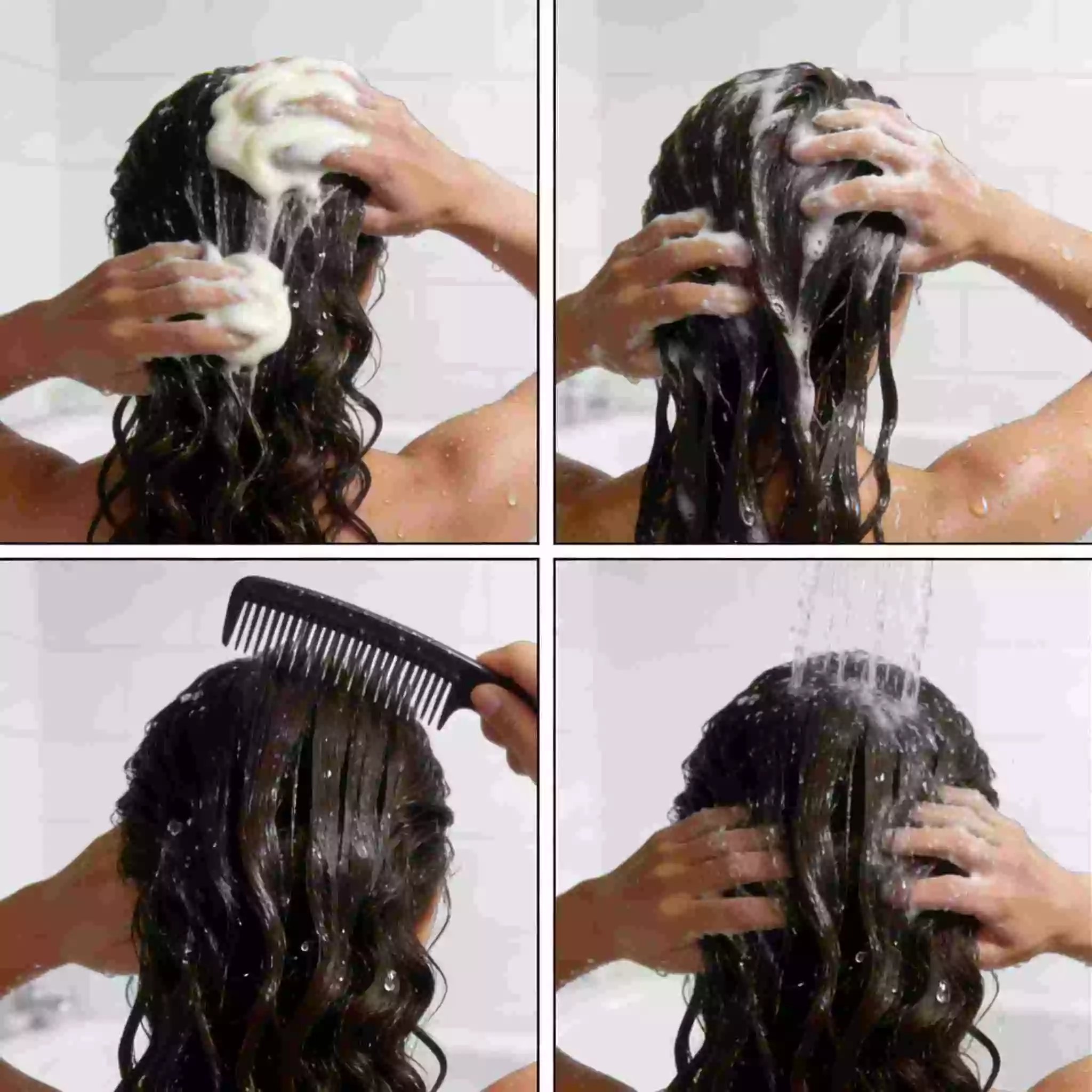
- Condition mid-ends (3–5 min)
- Finger-detangle in conditioner
- Wide-tooth comb ends-up
- Gentle rinse (no piling into a tight ball)
Pro: detangle before full rinse—conditioner is slip insurance.
→ Long Hair Care Routine
After Shower vs Before Wash: When to Detangle
Detangle before washing (optional, great for easy matting)
If your hair knots badly during washing, do a quick pre-detangle:
- dry or lightly misted hair
- 2–4 sections
- gentle ends-up pass (goal: reduce snags, not “perfect smooth”)
Detangle after shower (most common)
Best when you can add slip easily:
- blot (don’t rub)
- apply leave-in to mid-ends
- detangle ends-up in sections
For a full schedule that combines both, see → Long Hair Care Routine
Detangling Dry Hair Without Frizz
- Mist + leave-in/serum on tangles
- Section and go ends-up
- Seal ends lightly afterward (tiny amount)
Avoid: aggressive dry brushing (often triggers static + frizz).
Common scenarios: after the gym, windy days, or heavy scarf/collar friction—mist + slip first, then small sections.
How to Detangle Matted Hair Without Cutting
For severe mats:
- Saturate + wait
Soak the mat with conditioner + water (or detangling spray). Wait 5–15 minutes (gentle press, don’t yank). - Peel from the edges
Use fingers to separate tiny pieces from the outside first—don’t attack the center. - Micro-work ends-up
Fingers → wide-tooth comb in tiny moves. Add slip often.
If it becomes painful or you can’t separate the outer edges at all, professional help is safer than ripping.
Curly/Wavy Long Hair Detangling Quick Notes
Curly/textured hair tangles tighter—slip and timing matter:
- Detangle damp with heavy conditioner or leave-in (not bone-dry)
- Finger-detangle first; then wide-tooth comb if needed
- Use more sections and lighter pressure
- For mats: soften + peel from edges (never “power through”)
For low-friction styles that reduce tangles, browse → Long Hair Styles
For long-term consistency, see → Long Hair Maintenance
Overnight + Daily Habits to Reduce Tangles
Preventing knots makes detangling dramatically easier:
- Satin/silk pillowcase
- Loose braid/low bun (soft tie)
- Blot (no rub); reduce friction from collars/hoodies/backpacks
- Light leave-in refresh on non-wash days

Common Mistakes That Cause Breakage
- Roots-to-ends brushing (tightens knots downward)
- Dry detangling with no slip
- Force instead of adding product/water
- No sections (uneven tension)
- Rough towel rubbing
- Rushing when wet
- Ignoring split ends (snag cycle)
If ends keep catching, fix the cause → Prevent Frizz & Damage
2-Minute Detangle Module
Post-wash / daily quick:
- Blot gently
- Leave-in mid-ends
- Ends-up in 2–4 sections
- Optional tiny seal
Do: slow, slip, sections
Don’t: rush, yank, skip slip
Preview Low-Tangle Styles With AI
Protective and low-friction styles help minimize tangles, breakage, and daily detangling time. These are especially helpful while growing or maintaining long hair.
Quick low-tangle favorites:
- Loose braids (French, Dutch, fishtail, or infinity braid)
- Low or high messy buns with soft scrunchies
- Half-up twists or top knots
- Claw clip updos (pineapple or half-up claw)
- Silk scarf wrap or gentle headband styles
These reduce movement friction, keep ends tucked, and prevent wind/shoulder/backpack snags.
Risk-free preview with LongHair.ai's AI tools:
- LongHair.ai AI Styler → Try long hairstyles
- Facial Analysis → Find your best face-shape match
- Hair Color Changer → Test 20+ shades instantly
→ Long Hair Styles | Long Hair Trends
Quick FAQs
Wet or dry—what’s better for detangling long hair?
Wash day is usually best wet with conditioner slip. For daily touch-ups, mist + slip can work well if knots are light.
How do I detangle long hair without breakage?
Slip first, section hair, hold above the knot, and go ends-up in small moves. If it snags, add product—don’t add force.
What’s the safest way to handle severe or matted knots?
Soften with conditioner + water, wait, split into tiny edge sections, fingers first. If it’s painful, stop and get professional help.
Why does my hair tangle again right after detangling?
Friction (pillow/clothes), dryness, buildup, or split ends. Reduce overnight friction and check ends if it repeats
Brush vs comb—what should I use?
Wide-tooth comb is gentler on wet/conditioned hair. A flexible detangling brush is fast for daily use if you start at the ends and keep pressure light.
Next in This Cluster
- Ends keep snagging? → Prevent Frizz & Damage
- Want a full weekly plan? → Long Hair Care Routine
- Need daily habits that stick? → Long Hair Maintenance