Long straight hair usually stops looking clean at the edges first. Even when the top still sits well, the area around the ears, temples, and low nape can start to blur out, which is usually what makes the whole haircut feel less intentional.
That is where low taper with long hair on top works so well. It keeps the top long, keeps the side panel natural, and only tightens the places that get messy first.
This page is for straight hair only.
If your hair forms visible S-waves after air-drying, go to Long Wavy Hair Men instead.
For the parent page of this section, use Straight Hair Men.
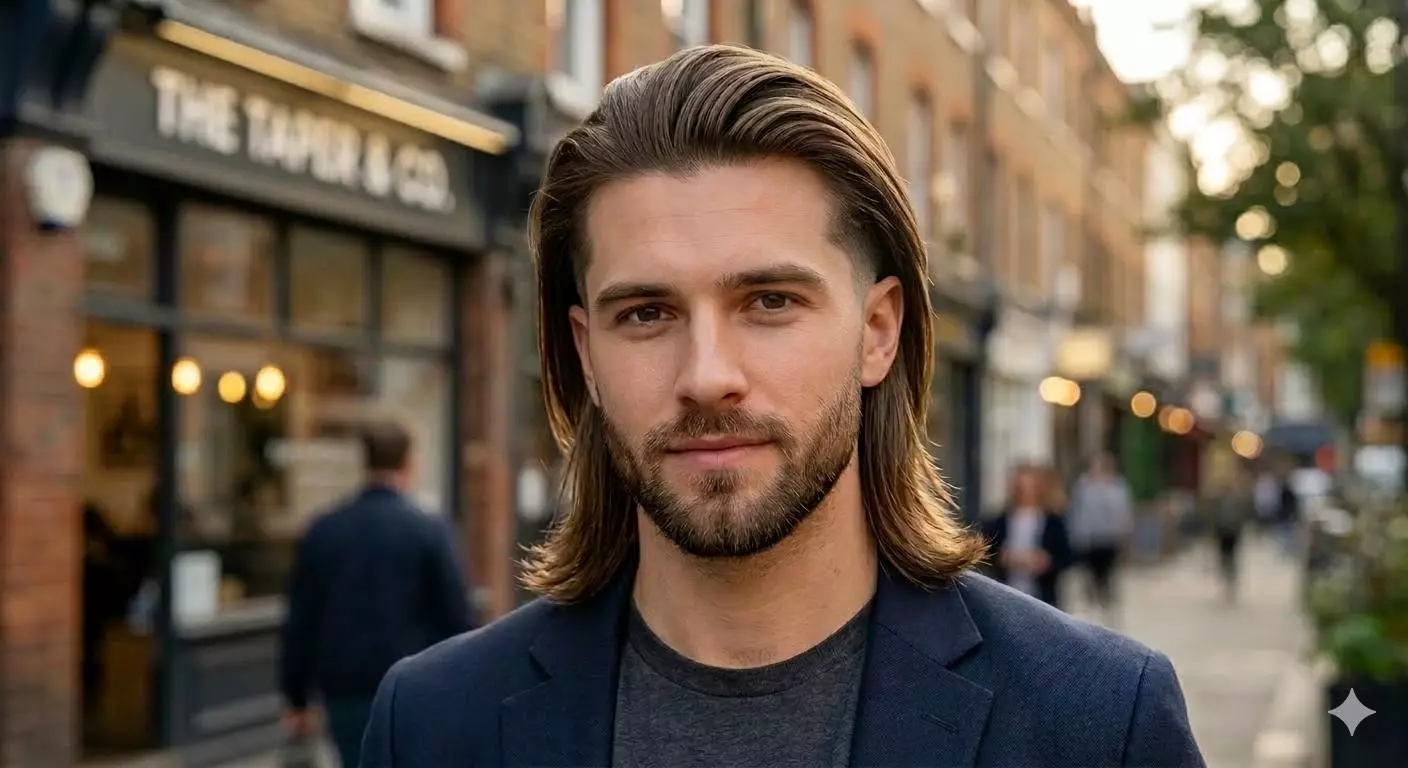
What is low taper with long hair on top?
This haircut keeps real length through the top and side panel while tapering only the temples, around the ears, and the low nape. On straight hair, it works best when the blend stays low and the side weight stays natural.
Why it works on straight hair
On straight hair, a low taper keeps the outline clean without taking away the long-hair shape.
The taper should stay low at the temples, around the ears, and at the nape, while leaving enough length through the side panel above it. That is also why low taper fade straight hair works so well here. Most men low taper long hair looks are really aiming for the same result: cleaner edges, better control around the ears and nape, and enough length left on top so the haircut still feels like long hair.
10 straight-hair ways to wear low taper with long hair on top
These are not ten separate haircut families.
They are ten straight-hair ways to wear the same low-taper base — different front shapes, different amounts of fullness, and different levels of polish, while the outline stays controlled.
1) Soft brush-back low taper
This is the easiest version to live with day to day.
The top moves back naturally, the lower outline stays clean, and the haircut looks intentional without looking overdone.
Best for
- first-time long-hair growers
- medium to thick straight hair
- everyday wear with low effort
Quick wear tip
Use a light cream and push the front back with your hands instead of forcing it flat.
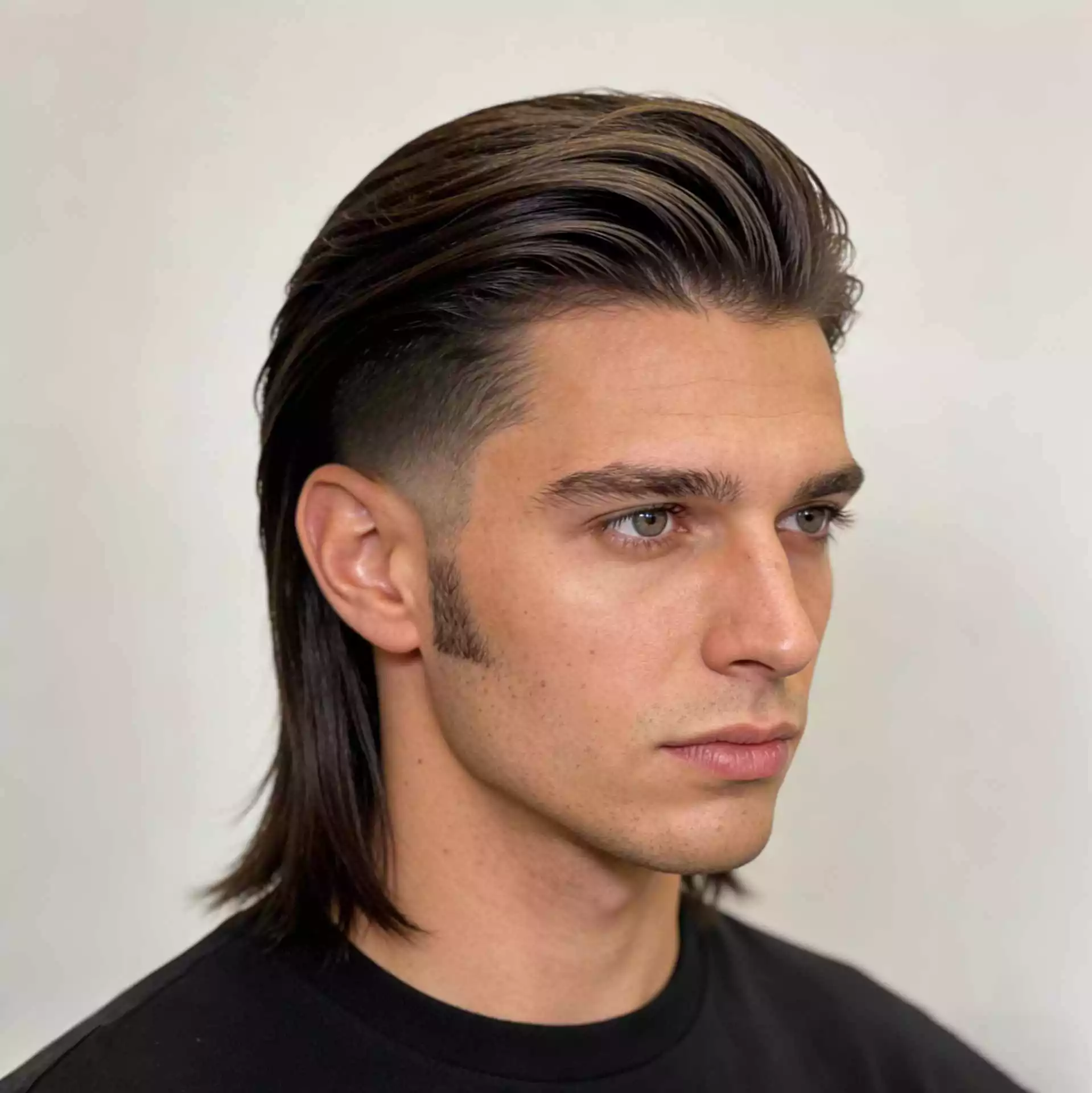
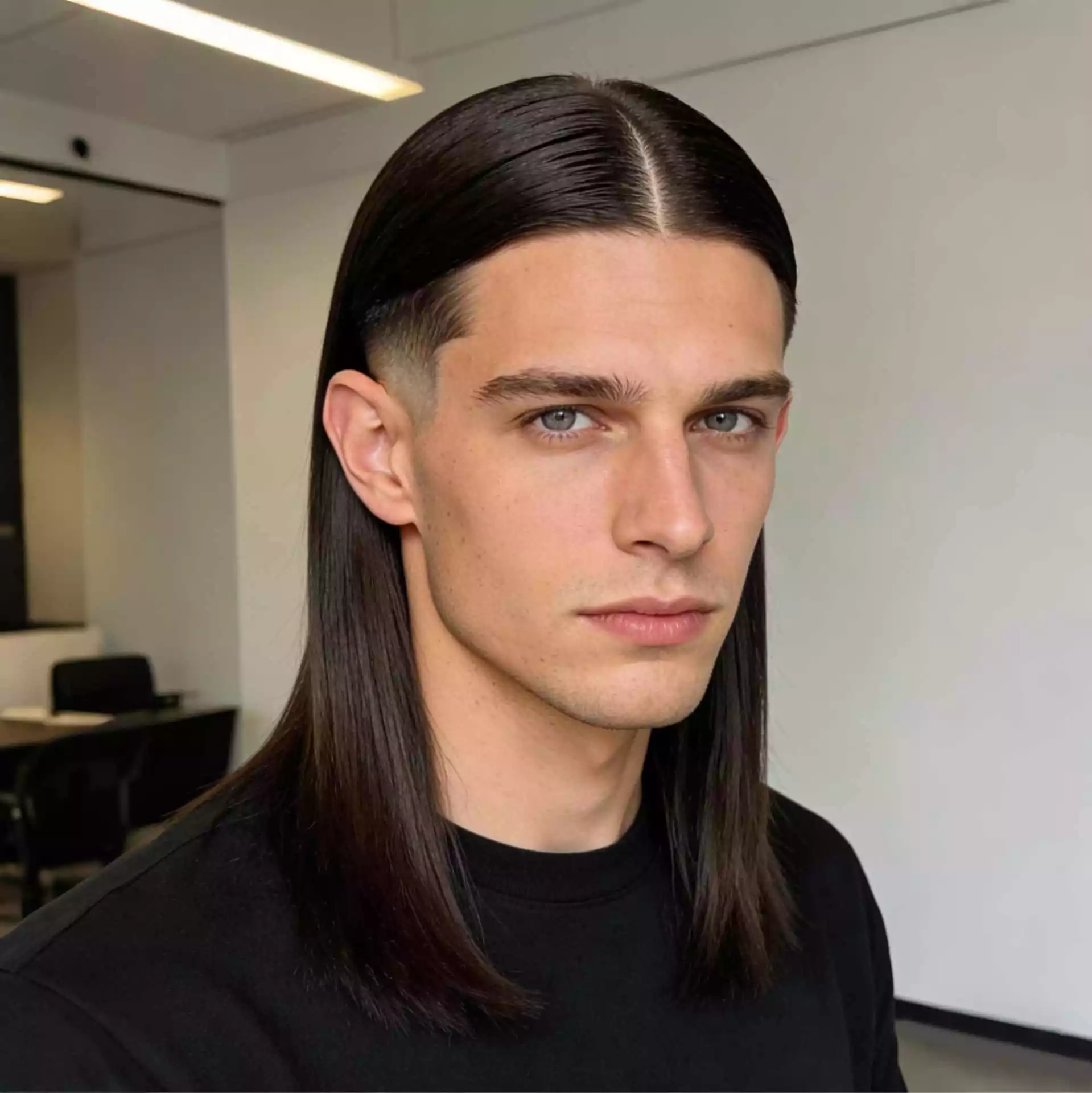
2) Middle-part low taper
This is one of the cleanest ways to make straight hair look styled without making it stiff.
The center opening gives the front structure.
The low taper keeps the side view tidy.
Best for
- balanced or oval face shapes
- straight hair with natural downward fall
- people who want a polished but relaxed finish
Quick wear tip
Blow-dry lightly from the crown forward and keep product light so the part does not collapse.
If you like this front-framing direction, go next to Middle Part for Long Straight Hair Men.
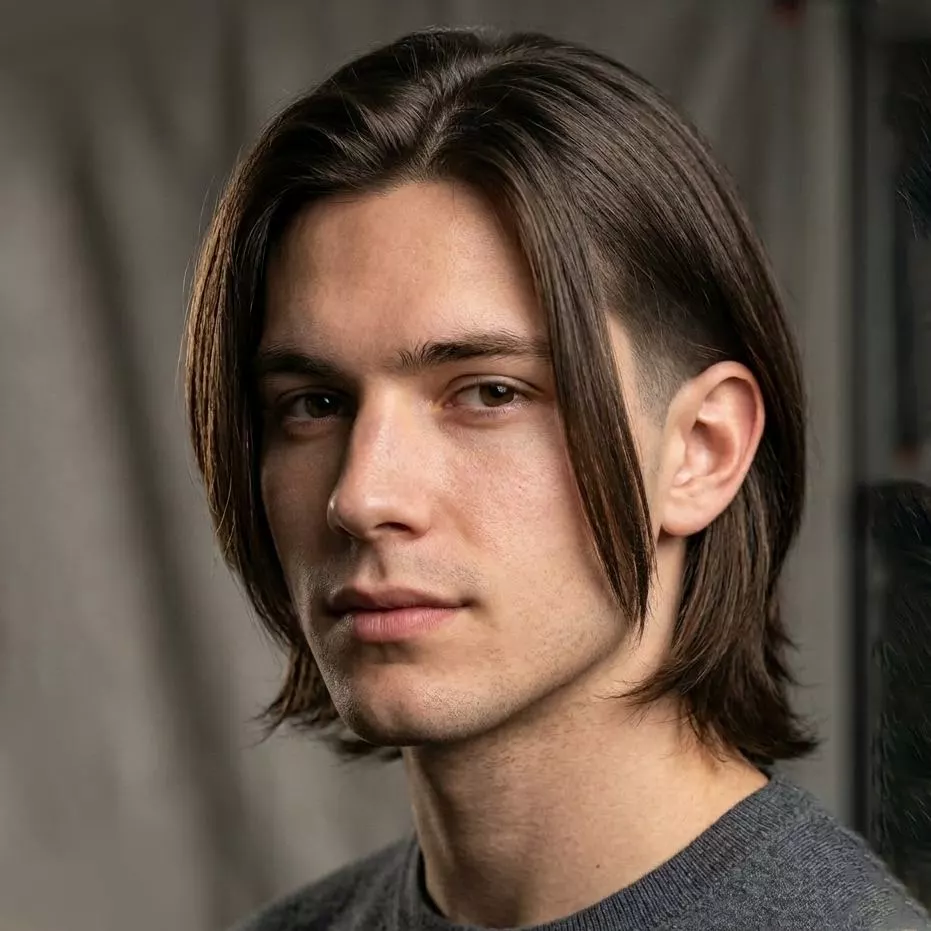
3) Off-center part low taper
This sits between a center part and a side part.
It gives the front some shape, but it feels looser and less formal than a clear side part.
Best for
- people who do not like a strict middle part
- straight hair with a natural diagonal fall
- casual everyday wear
Quick wear tip
Guide the front slightly off center and let one side sit a little fuller.
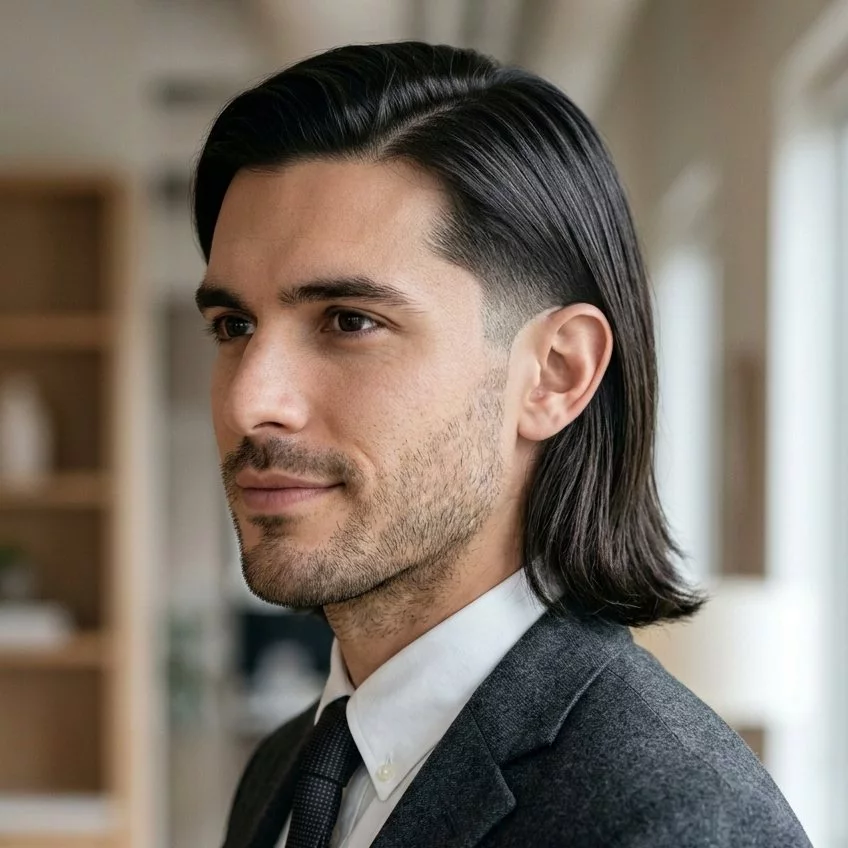
4) Side-part tuck low taper
This version feels a little more mature and very easy to wear.
The part creates direction.
The tuck opens the face.
The taper prevents the ear area from looking fuzzy.
Best for
- office-friendly styling
- straighter hair with a flatter side profile
- people who want a clean silhouette without sharp contrast
Quick wear tip
Guide the front to one side, tuck the lighter side behind the ear, and keep the finish matte.
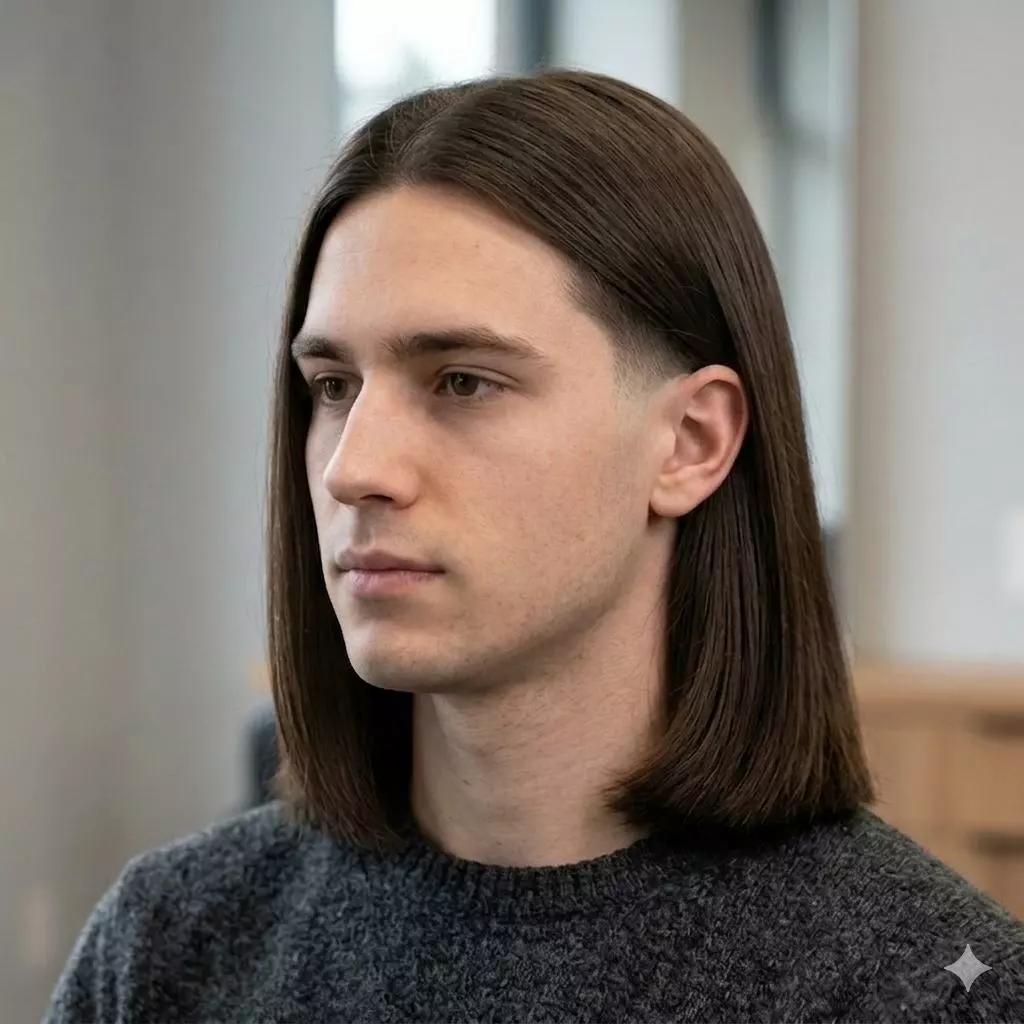
5) Blunt-end low taper
If your ends already look a little thin, this is one of the safest versions.
The stronger perimeter keeps the length looking fuller.
The low taper keeps the lower outline from getting scruffy.
Best for
- fine to medium straight hair
- ends that can look stringy
- people who want fullness more than visible layering
Quick wear tip
Keep the ends conditioned and avoid overworking them with dry, gritty product.
6) Soft-layered low taper
This is the version for straight hair that gets too heavy through the mids.
The taper keeps the outline controlled.
The layers make the top and mids move a little more without turning the haircut choppy.
Best for
- thick straight hair
- heavy one-length shapes
- people who want movement without obvious texture cutting
Quick wear tip
Work a little leave-in through the mids and lift the front lightly while drying.
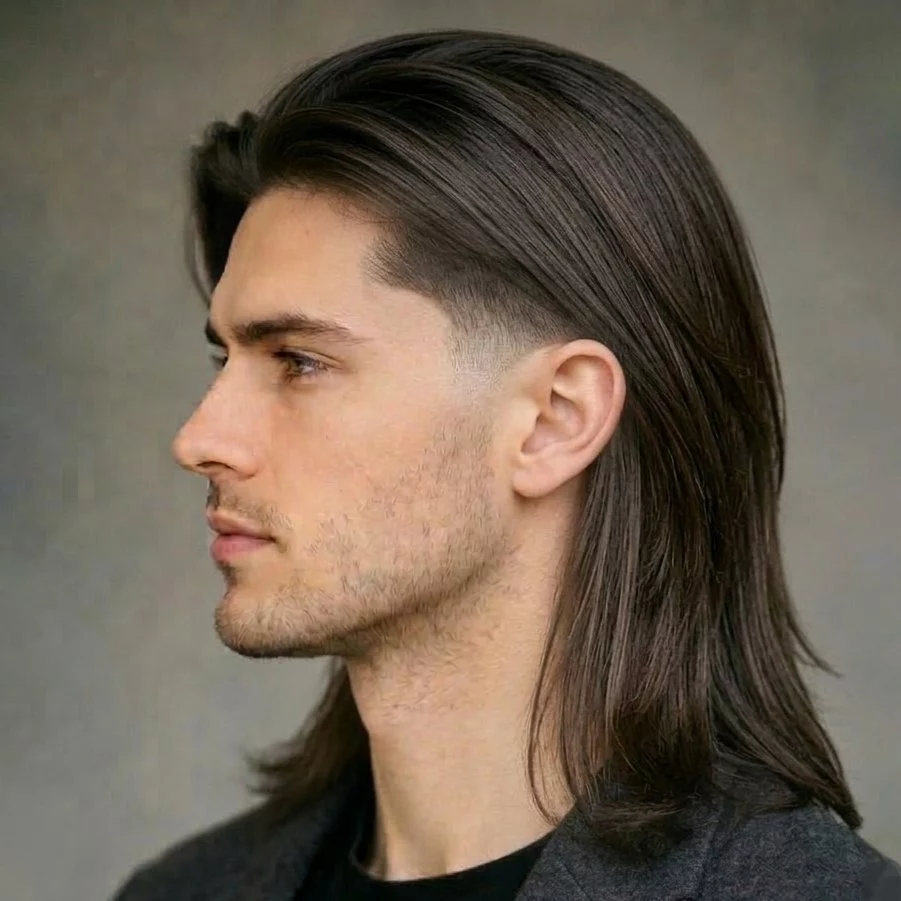
7) Slick-back low taper
This is the cleaner, more polished version of the shape.
It works because the taper keeps the lower edge crisp, while the long top still gives enough flow to avoid a flat, severe look.
Best for
- straighter hair with decent density
- dressier styling days
- people who want something sharper without going full fade
Quick wear tip
Use a light cream or low-shine pomade and comb the hair back loosely, not pasted flat.
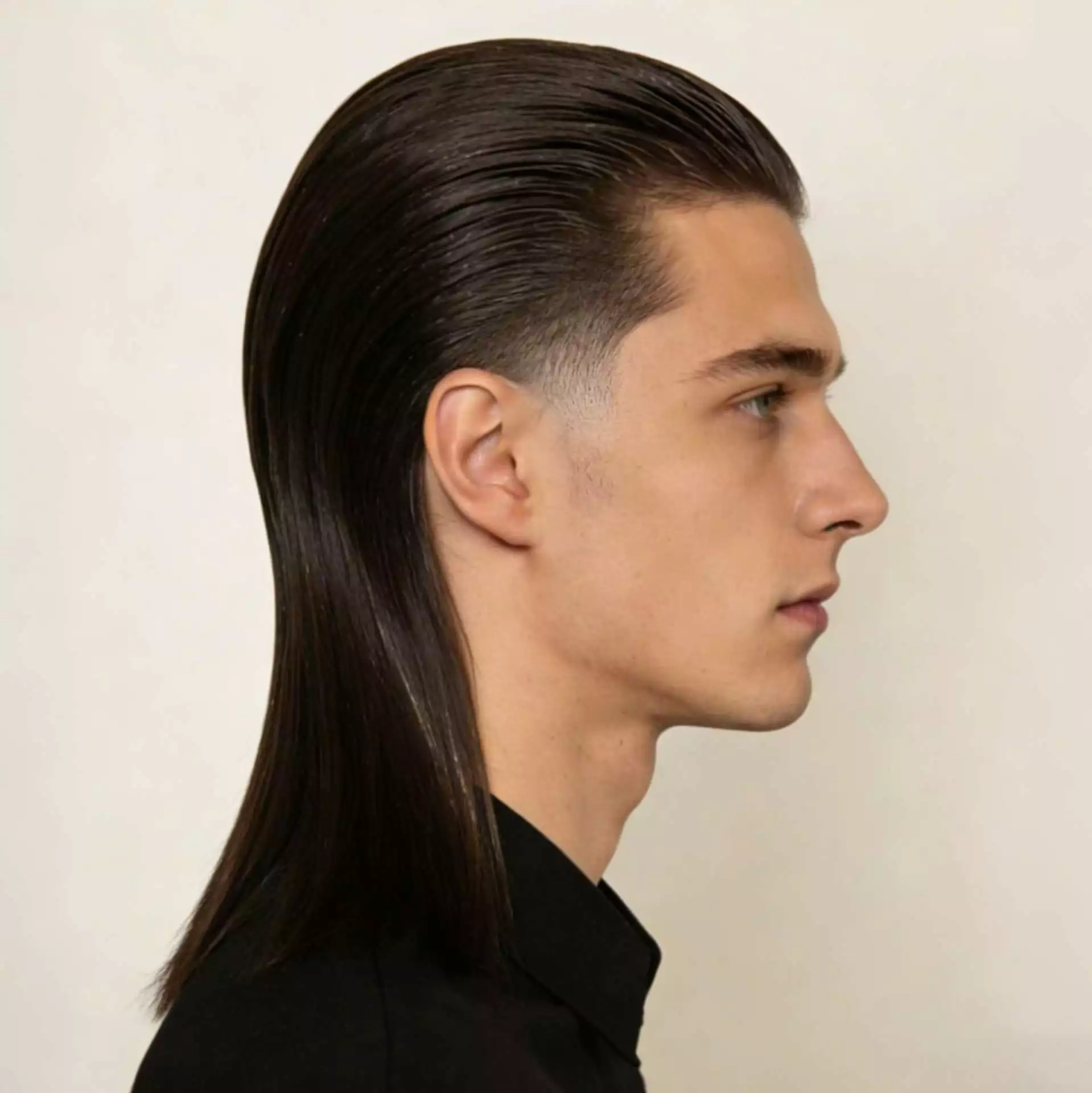
8) Low pony low taper
This is one of the most practical versions once the top has enough length.
The tied shape shows off the clean ear line and neckline, which is exactly where the taper helps most.
Best for
- grow-out stages
- gym days or hot weather
- people moving toward longer hair without wanting messy edges
Quick wear tip
Keep the tie low, leave the front a little relaxed, and avoid pulling everything too tight.
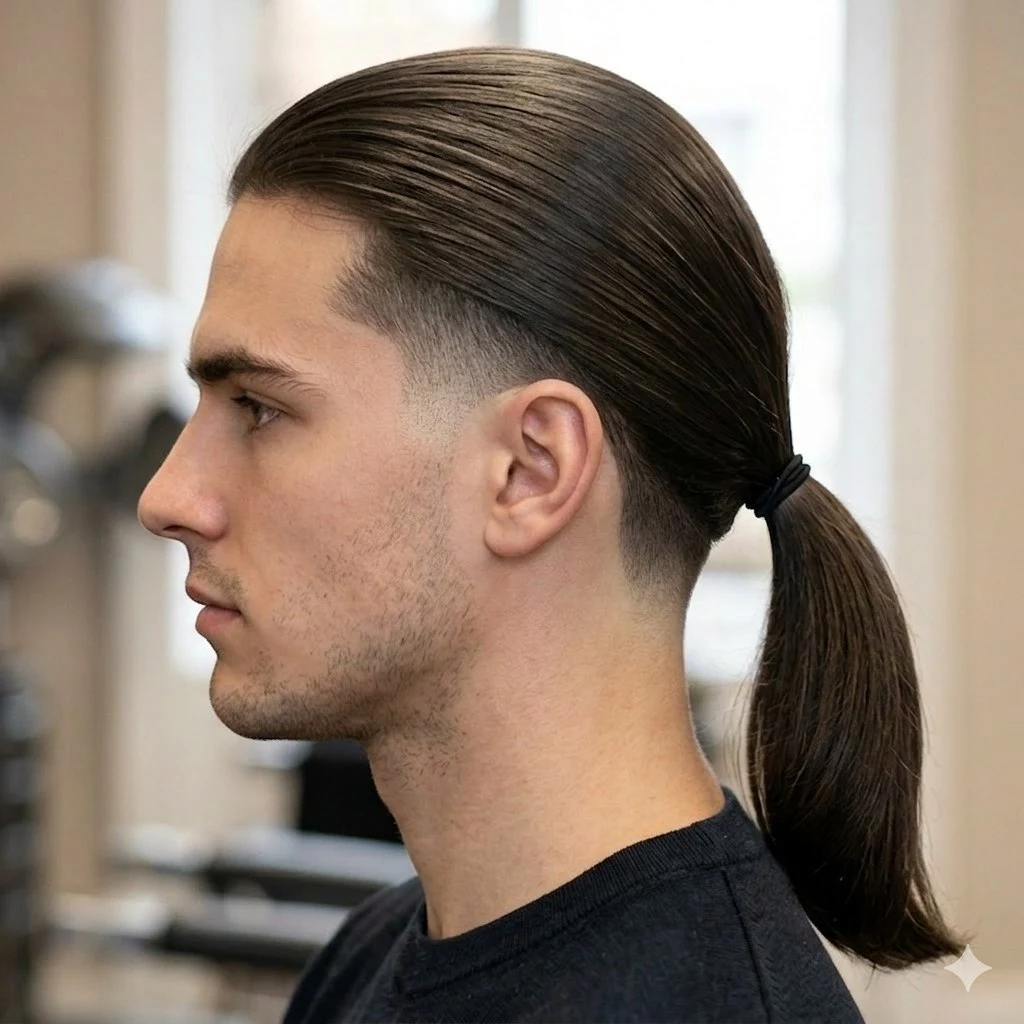
9) Half-up low taper
This is a strong middle ground between wearing it fully down and tying everything back.
It keeps movement in the lower length, but opens the face and shows the taper more clearly.
Best for
- medium-to-long straight hair
- people who want a little structure without full tie-back
- days when the front keeps falling forward
Quick wear tip
Tie only the top section and leave the lower length natural.
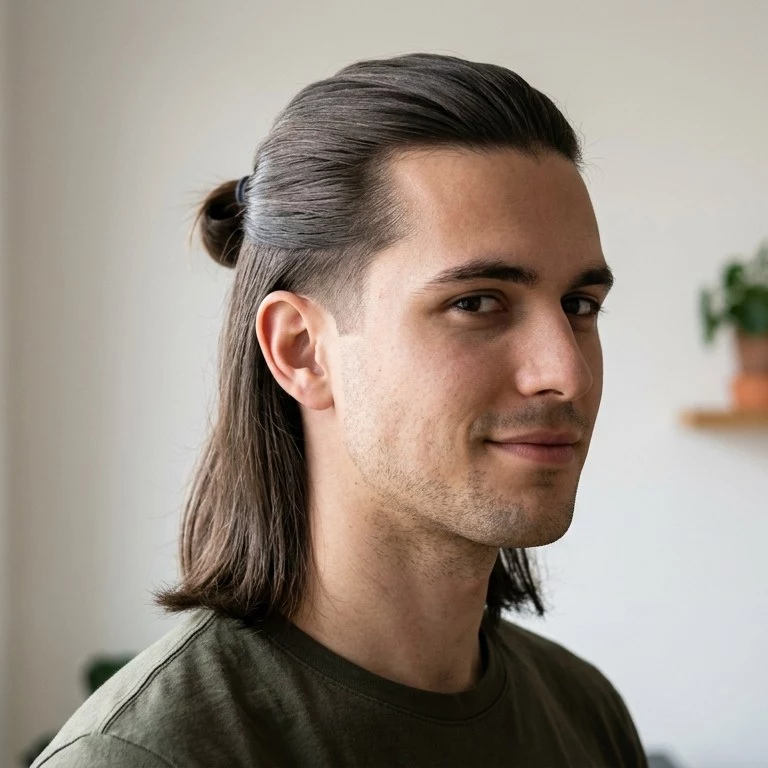
10) Grow-out low taper
This is the practical transition version.
You are not trying to finish the haircut yet.
You are trying to make the in-between stage easier.
The top keeps length.
The taper keeps the edges from making the whole cut look awkward.
Best for
- growing from medium to long
- future tie-back plans
- anyone who wants fewer reset cuts
- people whose sides grow messy faster than the top
Quick wear tip
Keep the top soft and movable, and focus on controlling the outline instead of recutting the whole shape.
If you are growing longer overall, your next stop is usually Men’s Long Hair Styles.
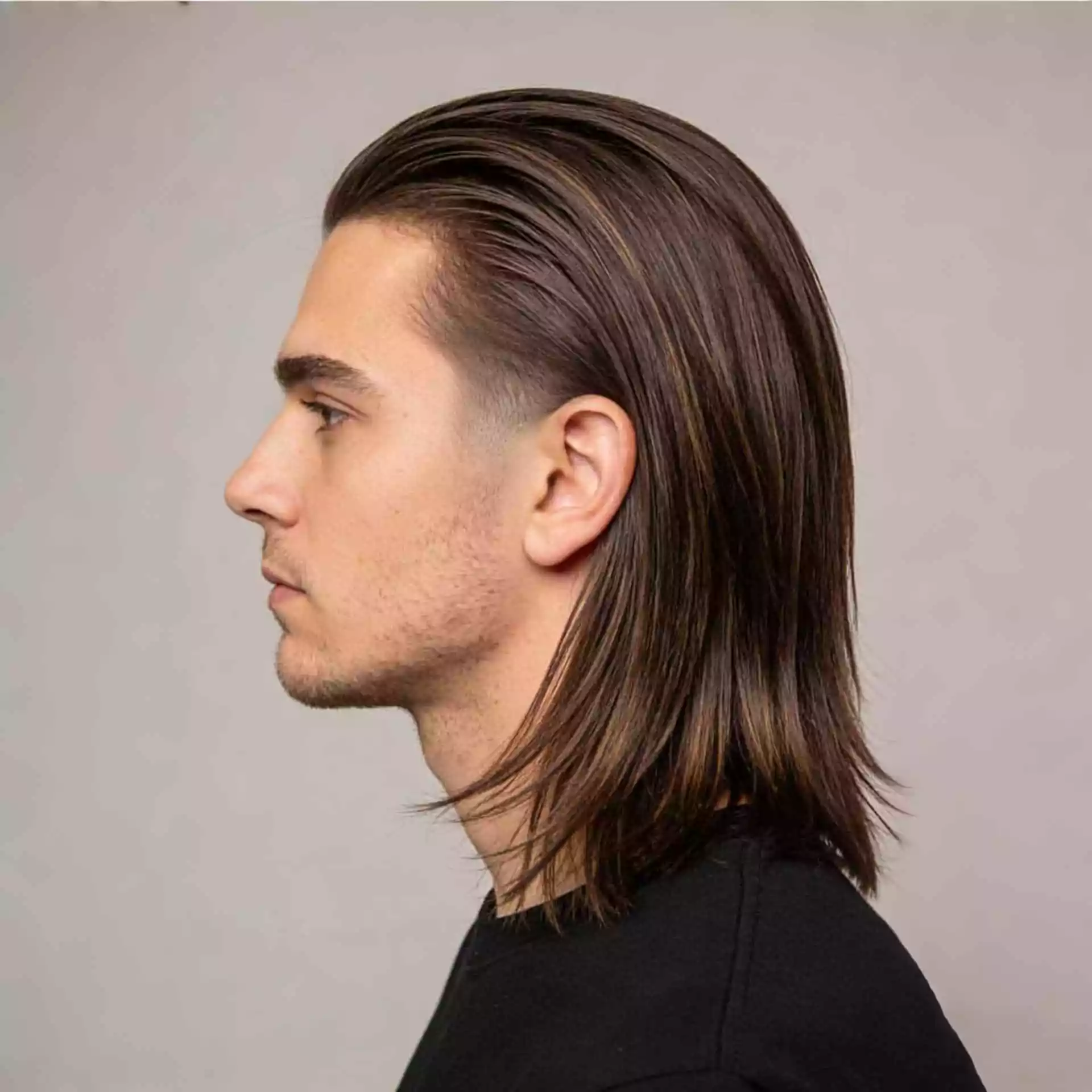
Low taper vs low fade
| Feature | Low taper | Low fade |
|---|---|---|
| Overall feel | Softer | Sharper |
| Contrast | Lower | Higher |
| Grow-out | Easier | More obvious |
| Best for | Natural long-hair shape | Cleaner cut-in look |
For most straight-hair growers, low taper vs low fade usually comes down to this:
low taper keeps the haircut softer and more natural, while low fade creates a sharper, more cut-in finish. That is why some low taper fade long hair references can look close at first glance, even though the softer taper version usually grows out more naturally on straight hair.
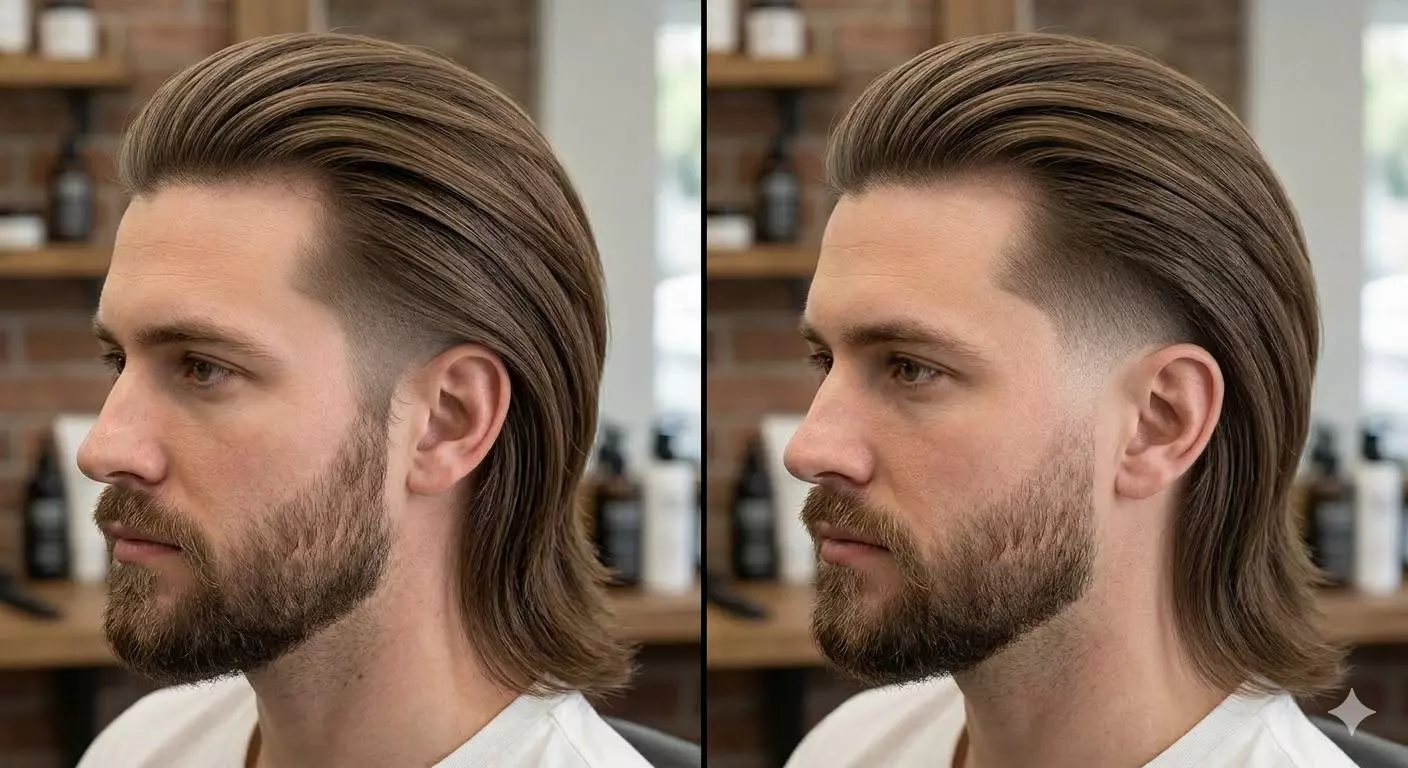
What to tell your barber
You do not need a complicated script.
You need a clear boundary.
Use this:
“I want low taper with long hair on top. Keep the top long and keep enough side weight so it still feels like long straight hair. Taper only at the temples, around the ears, and the low nape. Don’t take the blend too high. Keep the outline clean, but don’t over-thin the ends.”
If you want a smoother finish, add:
“Keep it neat and natural, not overly textured.”
If you want slightly more movement, add:
“Soft layers through the top are okay, but keep the perimeter strong.”
Low taper grow out long hair: what actually works
If you are growing longer, the biggest mistake is trimming the wrong part.
Do not keep cutting the top just because the outline starts looking messy.
Most of the time, the smarter fix is:
- clean the taper
- leave the top alone
- reshape only when needed
A simple grow-out rhythm looks like this:
Weeks 2–4
Clean around the ears and low nape if the outline starts looking fuzzy.
Weeks 5–8
Leave the top mostly untouched unless it is losing shape badly.
Month 3+
Decide what you want next:
- longer overall length → Men’s Long Hair Styles
- cleaner front framing → Middle Part for Long Straight Hair Men
- easier upkeep as it gets longer → Long Hair Maintenance
If tangles start increasing as the hair gets longer, use How to Detangle Long Hair.
That is why this shape works so well during grow-out: the outline stays cleaner while the top keeps moving toward a longer shape. The same logic is why low taper fade with long straight hair works well for people who want a neater grow-out without resetting the whole haircut.
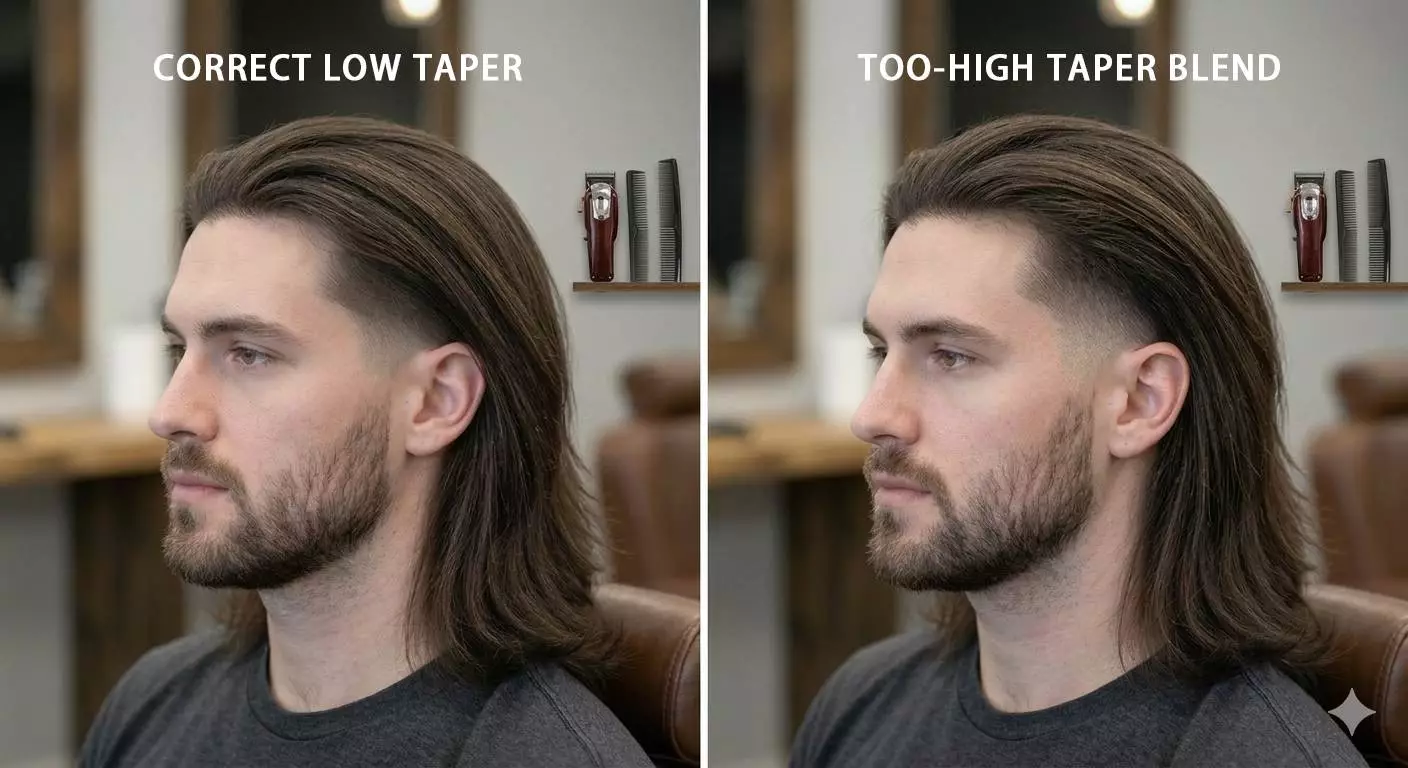
How low should the taper stay?
This is the most important choice on straight hair.
A good low taper usually stays:
- low at the temples
- low around the ears
- low at the neckline
- soft above the blend
If the taper goes too high, the haircut can lose that calm long-hair shape and start looking too contrast-heavy through the sides.
So when in doubt:
- keep the blend lower
- keep more side weight
- let the long top stay the main shape
Quick daily styling routine
You do not need much product for this haircut.
- Towel-dry to damp
- Add a small amount of lightweight cream or leave-in
- Blow-dry lightly into your natural part or push-back direction
- Keep the finish soft and touchable
Avoid heavy glossy product unless you want a deliberately slick look. Straight hair shows buildup fast, and too much product can make the haircut look heavy instead of polished.
FAQ
Is low taper with long hair on top good for straight hair?
Yes.
It is one of the cleanest ways to wear straight hair longer because it keeps the outline tidy without removing too much side weight.
What is the difference in low taper vs low fade on long straight hair?
Low taper looks softer and keeps more natural side weight.
Low fade looks sharper and more structured.
How often should I clean up the taper?
Usually every 2 to 6 weeks, depending on how crisp you like the outline.
The top usually does not need to be trimmed every time.
Does low taper fade with long straight hair still work if I want to grow it longer?
Yes.
That is one of the main reasons people choose it. The outline stays cleaner while the top keeps moving toward a longer shape.
Try it before you cut
👉 Preview Hair Colors Instantly