A middle part long hair men style works best when the front opens naturally, the outline stays clean, and the ends still look full. On straight hair, it is one of the easiest long looks to wear because the shape falls evenly and does not need much daily styling.
This page focuses on middle part long hair men styles that work especially well on straight hair. If you are comparing nearby directions, start with Long Straight Hair Men. If you want cleaner edges around the ears, see Low Taper + Long Straight Hair. If your hair dries into visible S-waves, move to Long Wavy Hair Men instead.

Quick answer
A middle part usually works best when:
- the front reaches around nose to chin level
- the opening looks soft instead of forced
- the hair around the ears and nape stays tidy
- the ends still look full instead of thin
Best starting points:
- thin-looking ends → choose a blunt-end version
- heavy straight hair → choose subtle internal layers
- easiest daily option → choose a tucked-behind-the-ears version
- still growing it out → choose a grow-out middle part
Who this style suits best
A middle part usually works especially well for:
- straight hair that falls relatively flat
- oval, heart, and balanced square faces
- men who wear their hair down more than tied back
- men who want a calm, balanced silhouette
It can be harder when you have:
- strong cowlicks at the front or crown
- uneven growth on each side
- very fine hair with transparent ends
- a strong preference for big root volume
That does not mean it cannot work. It usually means the haircut needs to be more precise, and softer versions often look better than sharper ones.
How long should hair be for a middle part?
For most men, the front usually needs to reach somewhere from around the nose area to the chin area before a middle part starts falling naturally.
As a rough guide:
- too short: the front sits high and refuses to separate cleanly
- workable: the front starts opening naturally and framing the face
- easier: longer front pieces create a softer, more relaxed curtain effect
If you are still in the grow-out phase, do not judge the style too early. A lot of awkward middle parts are simply a length problem, not a style problem.
10 middle part long hair men styles
These are the most useful versions to compare if you want a middle part long hair men look on straight hair. Pick the one that matches your density, current length, and daily routine.
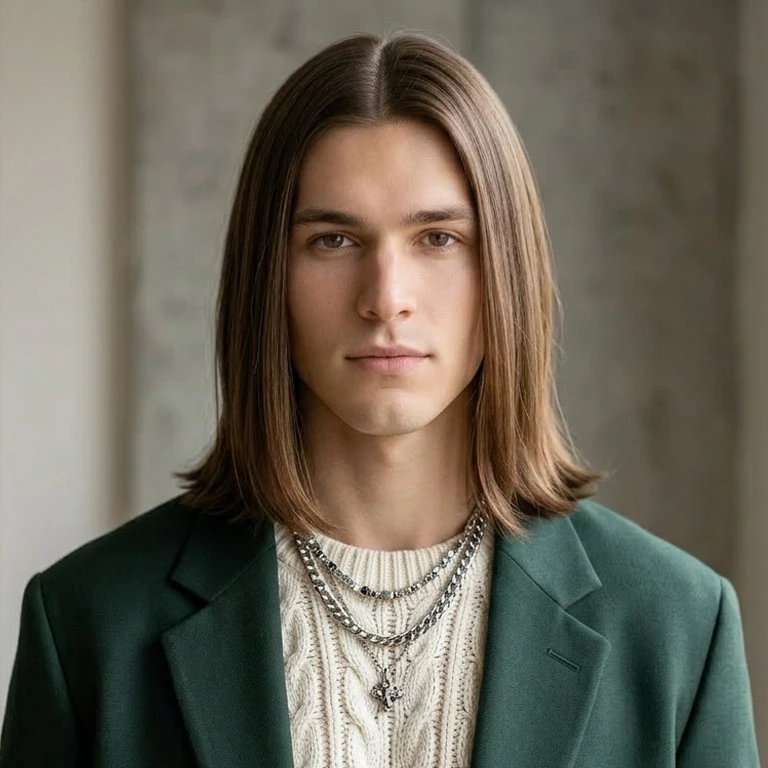
1. Collar-Length Straight Middle Part
This is one of the easiest entry points. The hair sits around collar length, opens naturally from the center, and still feels light enough to move without looking empty.
Best for: first-time growers, medium density, everyday wear
2. Curtain-Style Straight Middle Part
This version leans a little more curtain-like in front while the rest stays straight and controlled. It softens the face without making the haircut look overly styled.
Best for: narrower faces, finer straight hair, softer front shape

3. Blunt-End Long Middle Part
This keeps the ends fuller and more solid, with very little visible layering. If your hair tends to look stringy, this version usually looks healthier and more intentional.
Best for: fine-to-medium density, thin-looking ends, sleeker finish

4. Face-Framing Middle Part
This keeps the overall length simple but adds subtle shaping around the front. That small adjustment helps a middle part feel less flat against the face.
Best for: thicker straight hair, men who want a softer front outline
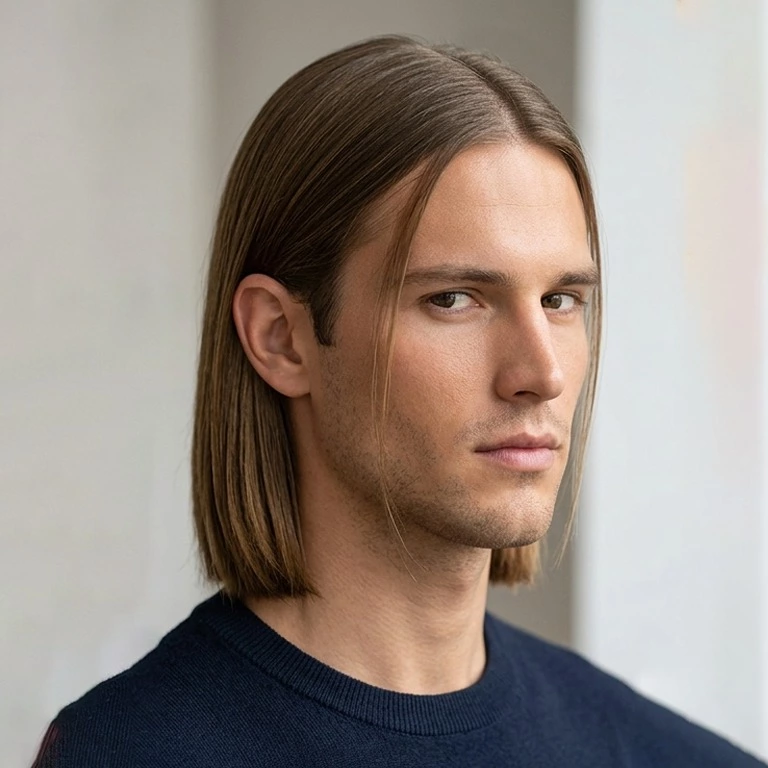
5. Tucked-Behind-the-Ears Middle Part
This is one of the most wearable real-life versions. The hair is long enough to part in the center, but shaped so it sits neatly behind the ears without puffing out too much.
Best for: office, meetings, low-maintenance routines
Related direction: Men’s Long Hair Styles
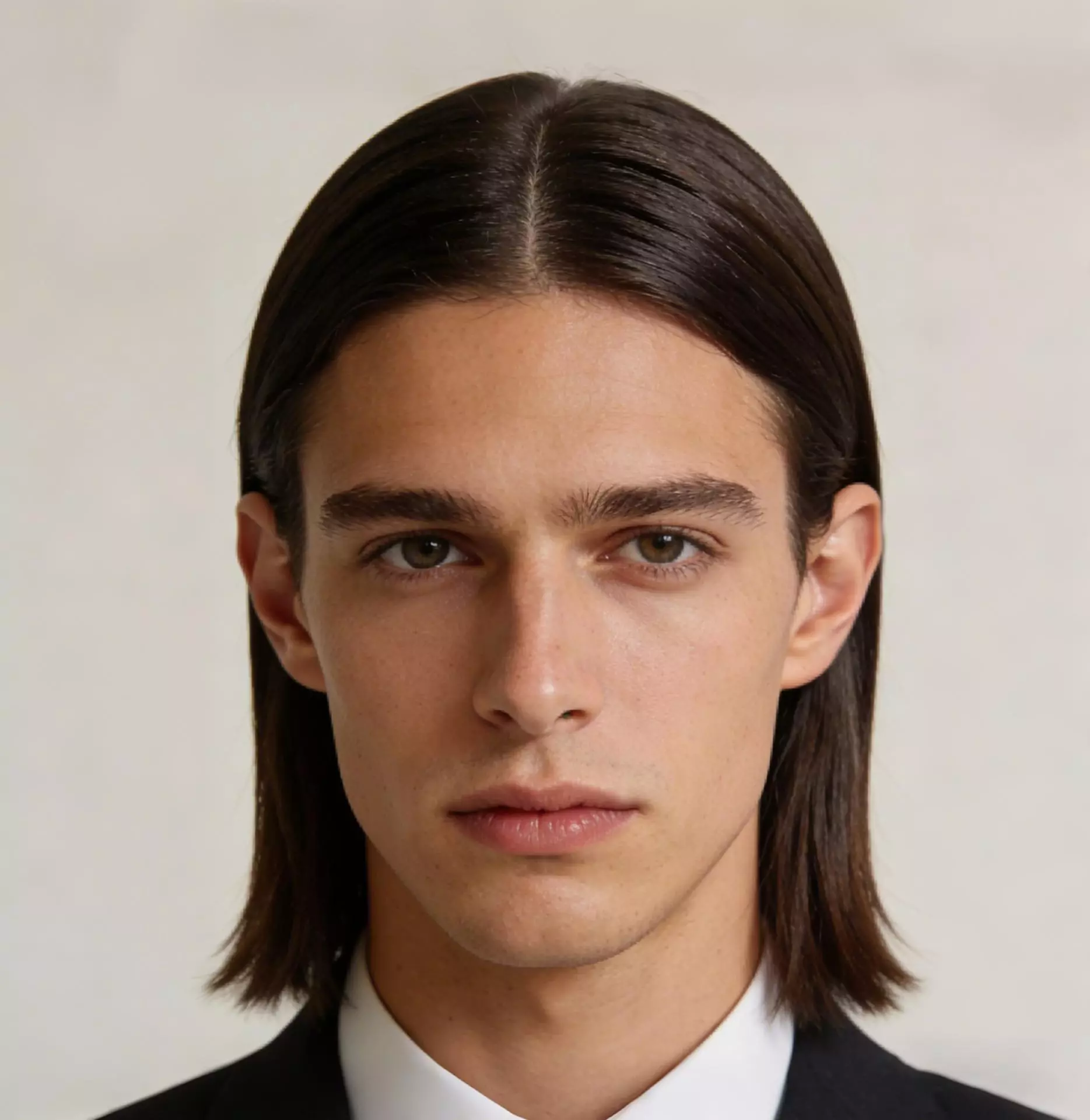
6. Shoulder-Length Middle Part
This is the fuller long-hair version. It works best when the outline stays tidy and the ends are maintained, otherwise shoulder-length straight hair can start to feel heavy or shapeless.
Best for: thicker hair, more visible length, tie-back flexibility
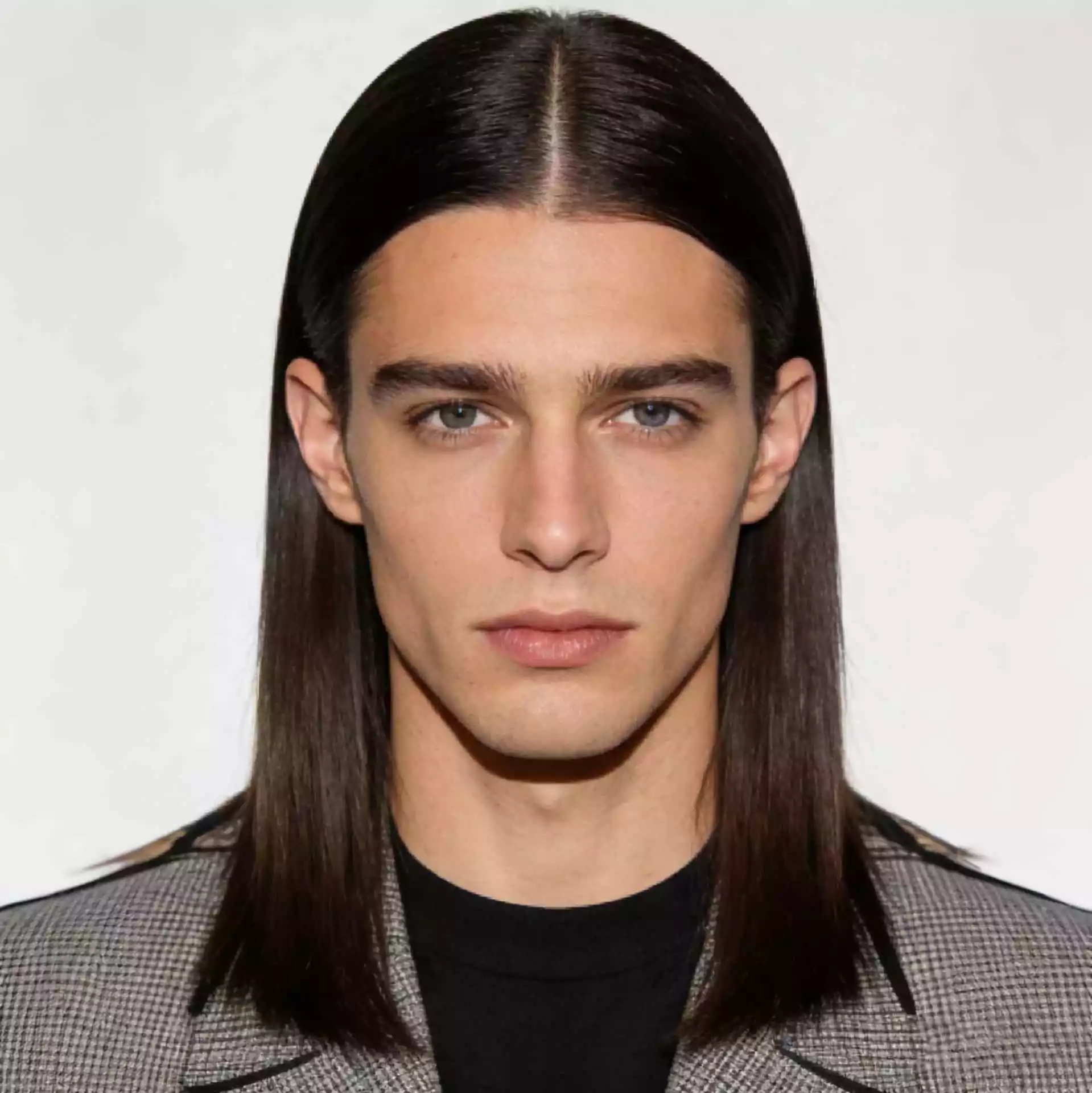
7. Internal-Layer Middle Part
From the outside, this still looks mostly simple and straight. Inside the haircut, a little weight is removed so the hair separates more naturally and does not sit too heavily.
Best for: thick or heavy straight hair
If you want more visible movement, move to Layered Long Hair for Men.

8. Clean Ear-Line Middle Part
This is for men who like a middle-part front but want the area around the ears to look cleaner and slightly sharper. It is not a fade style, but the silhouette feels more controlled than a softer full-length version.
Best for: straighter growth pattern, cleaner side profile, neater outline
For a stronger version of this idea, see Low Taper + Long Straight Hair.
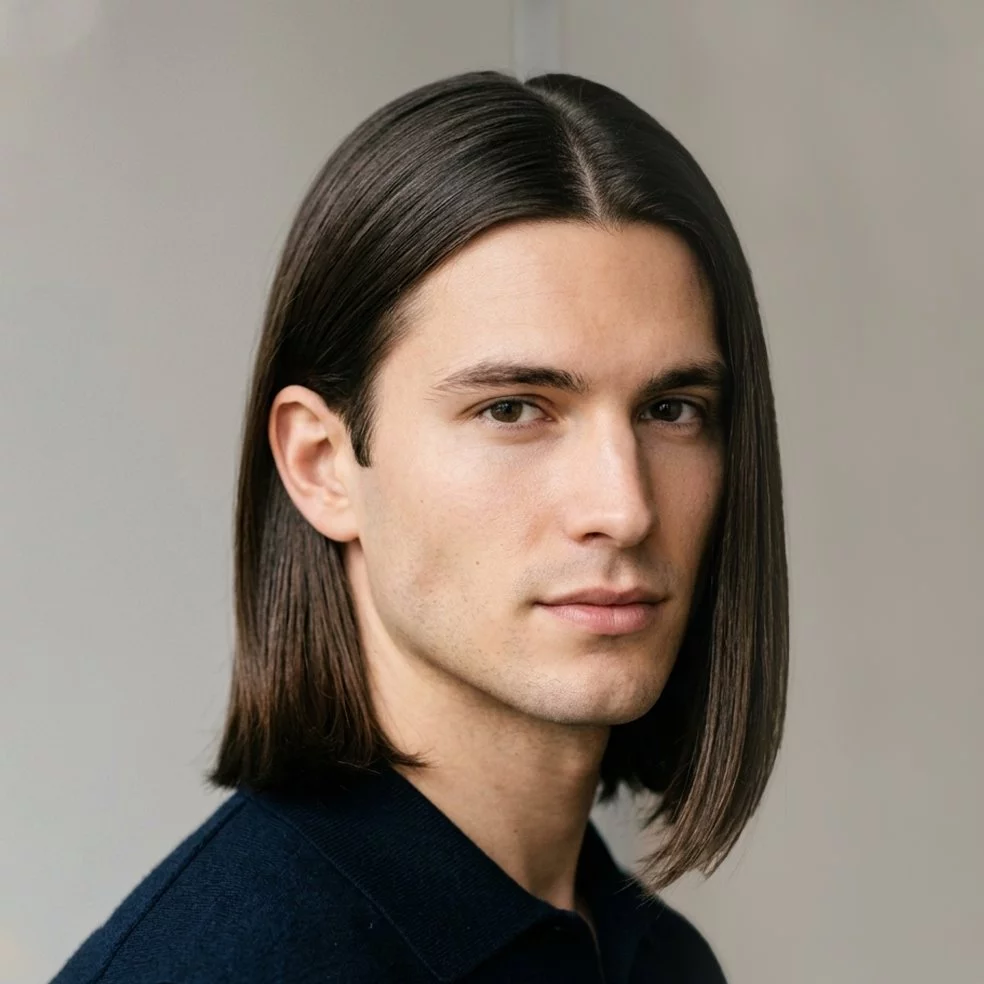
9. Grow-Out Middle Part
This is the stage many men quit too early. The part is already forming, but the full shape has not arrived yet.
Best for: growing from medium to long
The goal here is not perfection. It is simply keeping the outline clean while the front learns where to fall.

10. Natural Air-Dried Middle Part
This is the least “done” version: straight hair, center opening, minimal product, and no obvious styling. It usually looks best when the haircut underneath is already correct.
Best for: casual daily wear, low-product routines, soft natural finish

How to style a middle part for men
For middle part long hair men looks on straight hair, styling is usually more about guiding direction than creating volume.
Fast everyday method
- Start with damp hair, not dripping wet hair.
- Draw the part loosely near the center using fingers or a comb.
- Comb the front sections down and slightly away from the face.
- Place the sides where you want them while drying.
- Let the rest fall naturally.
- Finish with a tiny amount of lightweight cream or serum on the ends if needed.
For many men, that is enough.
If the middle part keeps collapsing
Usually one of these is happening:
- the front is still too heavy
- the roots dried in the wrong direction
- the haircut has no front shaping at all
- the hair is too dirty or too coated with product
Try this instead:
- part it while damp
- clip each front side loosely for a few minutes as it starts drying
- remove the clips and let it finish naturally
- avoid heavy wax at the roots
If it looks too flat
Do not assume you need stronger product. On straight hair, flatness is often solved better by lighter internal shaping or a cleaner front opening than by forcing extra texture.
If it bends into visible waves while drying, switch to Long Wavy Hair Men instead.
How to ask your barber
A lot of bad middle parts are not caused by the part itself. They usually happen because the haircut underneath is too blunt in the wrong place, too disconnected, or too layered around the front.
Use something like this:
“I want a middle part on long straight hair. Keep the overall length. Keep the ends looking full. Add only light shaping around the front so it opens naturally from the center. I don’t want heavy short layers or a fluffy top. Keep the ears and neckline clean.”
You can also add one of these depending on what you need:
- “My hair gets flat, so remove a little internal weight without making the ends thin.”
- “My ends already look light, so keep the perimeter stronger.”
- “I wear it tucked behind the ears a lot, so keep that area clean.”
- “I want a softer curtain shape in front, not a harsh split.”
What to avoid asking for
These requests often create the wrong result on straight long hair:
- “Make it more textured”
- “Thin it out a lot”
- “Give it layers everywhere”
- “Make it messy”
Straight hair usually looks better when the shape is controlled first and texture stays secondary.
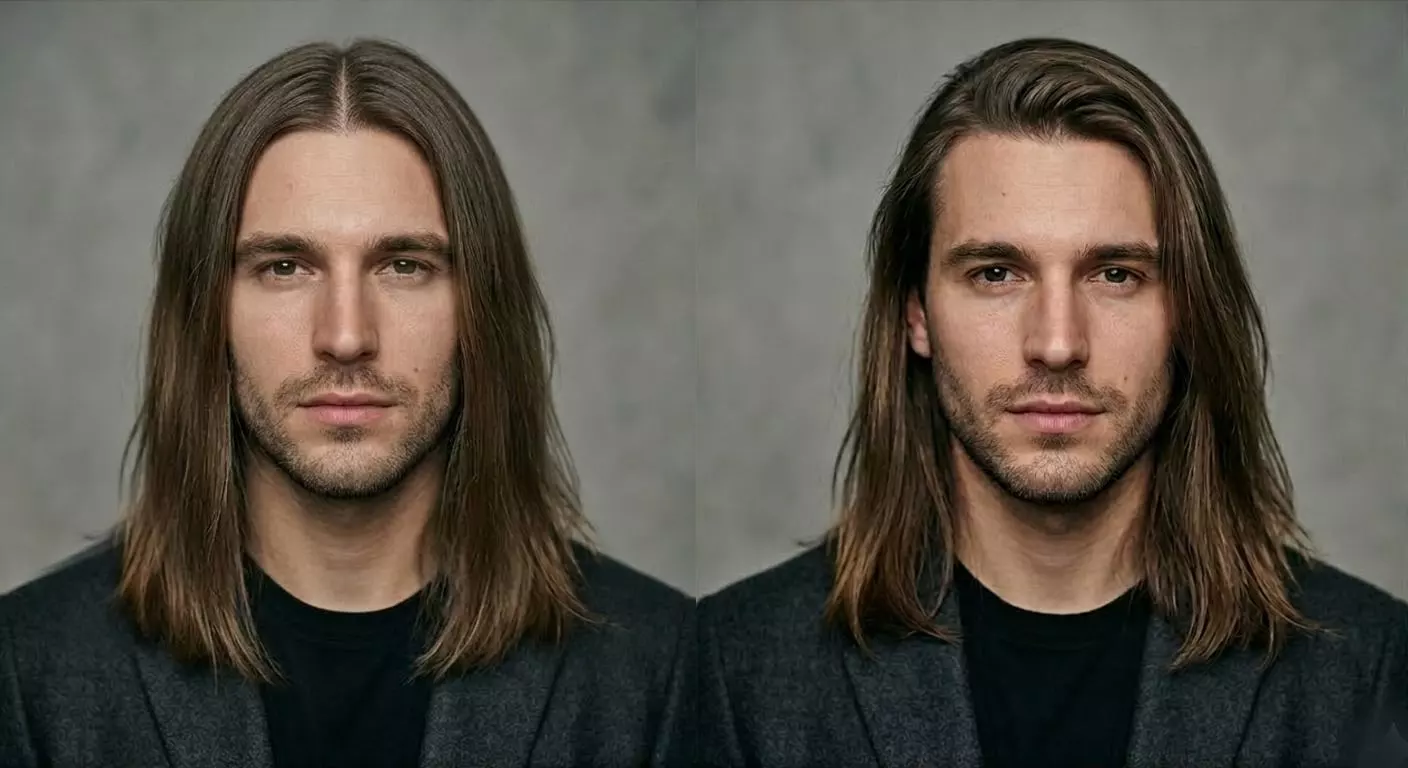
Middle part vs side part
Middle part
- balanced, symmetrical look
- face framing on both sides
- cleaner straight-hair silhouette
- works best if you wear the hair evenly down
Side part
- more sweep and asymmetry
- easier coverage on one side
- more directional or classic feel
- easier if one side behaves better naturally
Simple rule: choose a middle part if you want even framing and a calmer shape. Choose a side part if you want more direction or one side of your hair clearly falls better than the other.
Common mistakes with middle part long hair men styles
1. Over-layering
Too many layers make the front weak and the bottom thin.
2. Letting the ends get too light
A middle part on long straight hair usually looks better when the perimeter still feels solid.
3. Heavy product at the roots
This usually makes the hair look greasy, not polished.
4. Cutting the front too short
Then the middle part no longer frames the face properly.
5. Treating straight hair like wavy hair
What helps create movement on waves often looks forced on very straight hair.
Easy ways to wear this cut
- tucked behind the ears for a cleaner daily look
- natural air-dried for a soft, relaxed finish
- lightly polished for office or dinner plans
- loosely tied back when you need it off your face
This is one reason the style stays popular: it can look neat, soft, or slightly dressed up without becoming a completely different haircut.
Quick daily upkeep
You do not need a long routine. Usually this is enough:
- wash as needed, not automatically every day
- keep conditioner focused on mids and ends
- part the hair while damp, not after it fully dries
- use a tiny amount of lightweight product only if needed
- trim before the ends start looking transparent
That last point matters. A middle part long hair men look on straight hair is strongest when the ends still look alive.
For upkeep, these care pages fit naturally with this haircut: Long Hair Routine, Long Hair Maintenance, and Fix Split Ends.
FAQ
Is middle part long hair good for men with straight hair?
Yes. Straight hair is usually one of the easiest textures for a middle part because it opens clearly and falls evenly on both sides. The key is keeping enough front length and avoiding a cut that removes too much weight from the ends.
How long should hair be for a middle part men style?
For most men, the front usually needs to reach somewhere around nose to chin level before a middle part starts looking natural. Before that point, the shape often separates unevenly or springs back shut.
Do men need layers for a middle part with long hair?
Not always. Many straight-hair middle parts look best with very light shaping only. If your hair is thick or heavy, subtle internal layers may help. If your hair is fine or the ends already look thin, a stronger blunt perimeter is usually better.
What face shape suits a middle part best on men?
A middle part often looks especially strong on oval, heart, and balanced square face shapes because it creates even framing on both sides. Longer faces usually benefit from a softer opening rather than a severe sharp split.
Why does my middle part not stay in place?
Usually the front is still too short, the roots dried in the wrong direction, or the haircut does not support the part. Parting while damp and guiding the roots early usually works better than adding more product.
Is middle part or side part better for men with long hair?
A middle part usually works better if you want balance and symmetry. A side part is often easier if one side falls better naturally or if you want a more directional front.
Try these tools on your photo
Not sure which version suits your face shape or current length? Try these tools on your own photo first.