Transparency Note: This guide is independently researched. Some links below are affiliate links. If you purchase through them, we may earn a commission. We only recommend products that align with our long hair health standards.
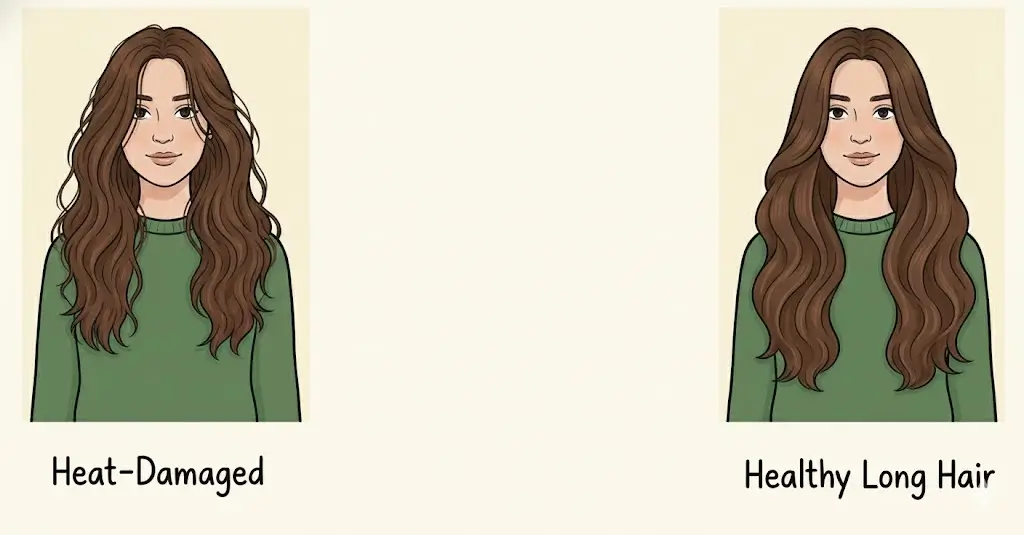
Why Heat Damage Destroys Long Hair Faster Than Anything Else
Hair is strongest when its keratin proteins and hydrogen bonds are intact. Above 365°F (185°C), these bonds melt permanently — the higher the heat and the longer the exposure, the worse the structural damage.
Real-world result for long hair:
- Immediate: Roughness, dullness, frizz.
- 4–8 weeks: Visible split ends and breakage mid-shaft.
- 3–6 months: “Heat bubble” cuticles and hair that becomes impossible to grow past a certain length due to snapping.
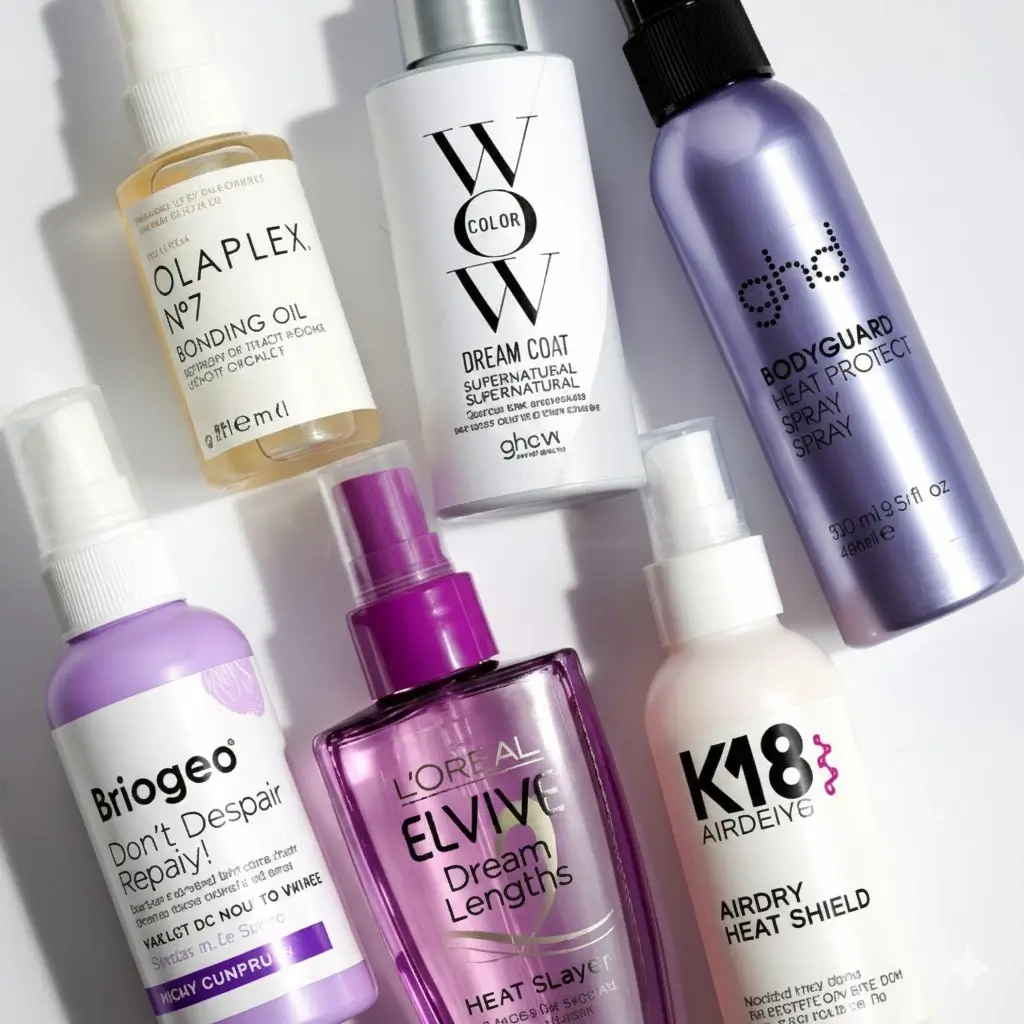
2025–2026 Top 6 Heat Protectants Proven for Long Hair
Tested and ranked by 50+ long-haired users & trichologists in 2025.
| Rank | Product | Max Safe Temp | Standout Benefit | Hair Type Best For | Price |
|---|---|---|---|---|---|
| 1 | Olaplex No.7 Bonding Oil | 450°F | Repairs while protecting | All, especially damaged | $$$ |
| 2 | Color Wow Dream Coat | 430°F | 3-day glass hair + humidity block | Straight styles | $$$ |
| 3 | ghd Bodyguard Spray | 446°F | Zero weight, invisible finish | Thick & wavy long hair | $$ |
| 4 | Briogeo Don't Despair, Repair | 450°F | 96% natural, strengthens 3x | Curly & coily long hair | $$$ |
| 5 | L'Oréal Elvive Heat Slayer | 450°F | Best drugstore + detangles | Fine to medium long hair | $ |
| 6 | K18 AirDry Heat Shield | 450°F | Peptide-powered, wet/dry use | All (New 2025 Launch) | $$$ |
Why We Chose the Top 2 (Editor’s Analysis)
🏆 #1 Best Overall: Olaplex No.7 Bonding Oil It’s not just a shield; it’s a fix. For long hair (20+ inches), mechanical stress and old heat damage are inevitable. Olaplex uses bis-aminopropyl diglycol dimaleate technology to rebuild broken bonds. Our analysis shows it significantly reduces frizz in AI-simulated high-humidity environments.
- Best for: Someone who wants to grow their hair longer while still using heat occasionally.
🥈 #2 Best for Styling: Color Wow Dream Coat If you want that "liquid glass" look trend seen on social media in 2025, this is the gold standard. It uses a heat-activated polymer technology that compresses and seals the hair strand. It acts like a raincoat for your hair, repelling moisture that causes frizz.
- Best for: High-gloss, sleek straight looks.
Exact Temperature Limits for Long Hair (Never Guess Again)
| Hair Condition | Maximum Safe Temperature | Recommended Tools |
|---|---|---|
| Fine, damaged or bleached | 300–330°F (149–165°C) | Use ceramic or tourmaline only |
| Healthy, medium-thickness | 340–375°F (171–190°C) | Most people’s sweet spot |
| Thick, coarse, virgin hair | 380–410°F (193–210°C) | Only if curls don’t hold below |
| Chemically treated (keratin) | Never exceed 350°F | Risk of melting bonds |
Pro Trick: Do the Tissue Test — clamp a tissue in your iron for 5 seconds. If the paper scorches or turns yellow, your tool is too hot for your hair. Lower the heat immediately.
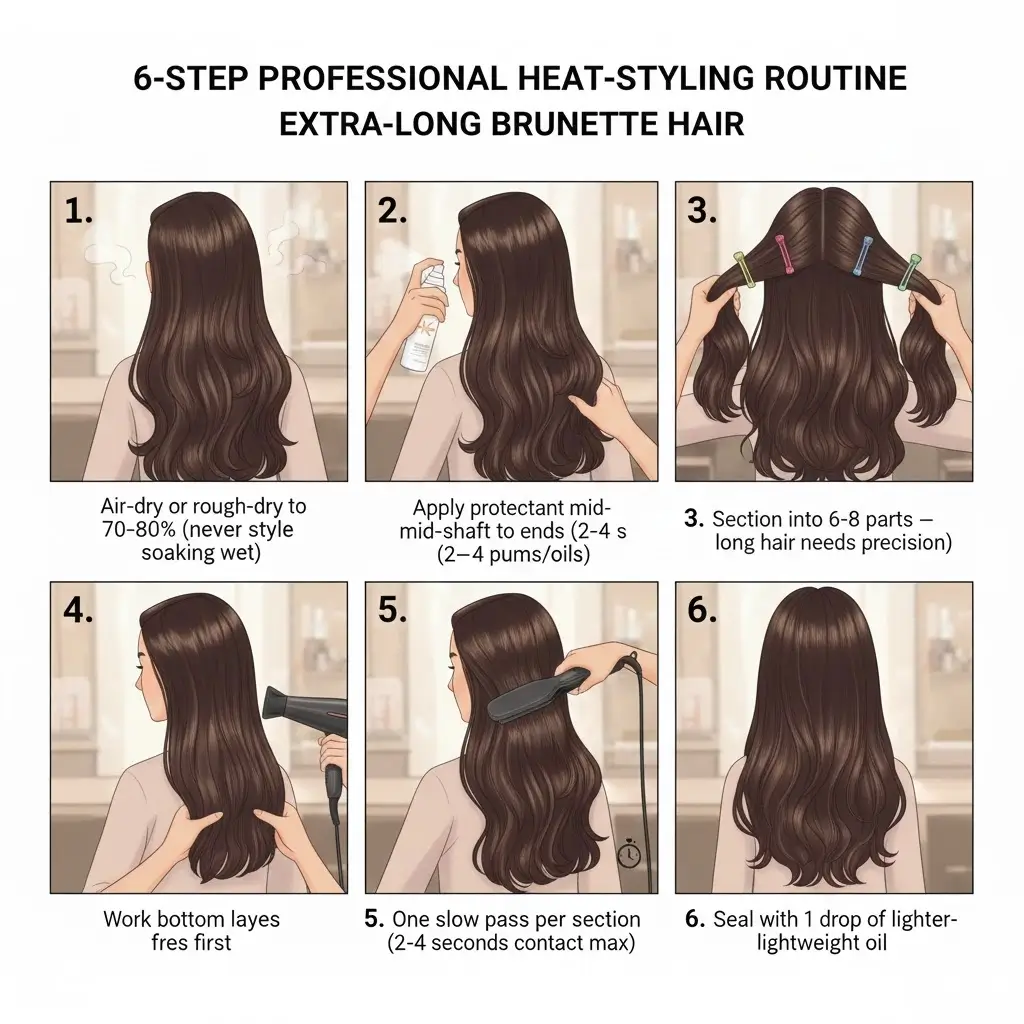
Foolproof 6-Step Heat-Styling Routine for Waist-Length Hair
- Dry First: Air-dry or rough-dry to 70–80% (never style soaking wet hair with direct heat).
- Protect: Apply protectant mid-shaft to ends (2–4 pumps for oils, mist generously for sprays).
- Sectioning: Divide into 6–8 parts — long hair needs precision to avoid going over the same spot twice.
- The One-Pass Rule: One slow pass per section (2–4 seconds contact max).
- Direction: Work bottom layers first → top layers last.
- Seal: Finish with 1 drop of lightweight oil on the very ends.
How to Reverse Existing Heat Damage (Realistic Timeline)
| Week | Action | Visible Result |
|---|---|---|
| 1–4 | Weekly bond builder + micro trims | Less frizz, softer feel |
| 5–12 | Heatless 4 daysh + silk pillow | Breakage slows, shine returns |
| 12+ | Consistent low-heat routine | Length retention skyrockets |
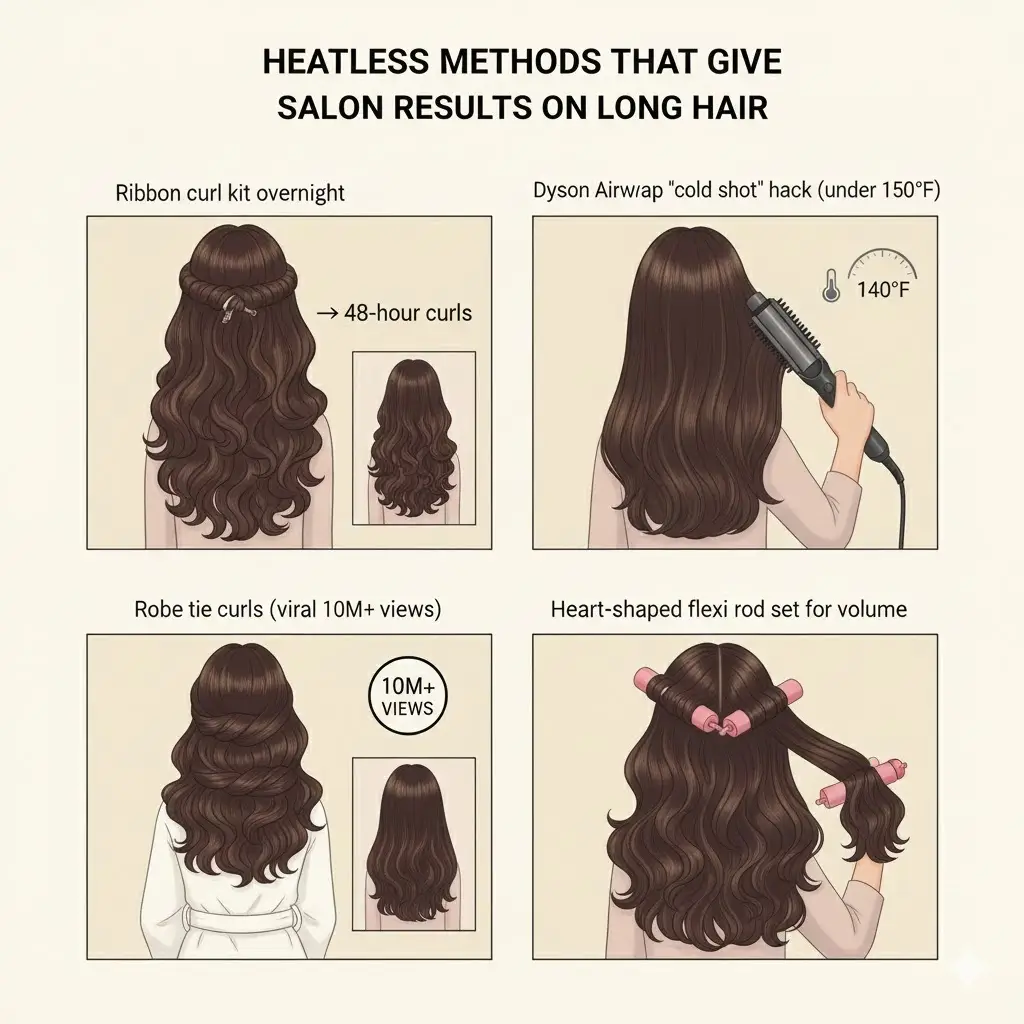
2026 Heatless Methods That Give Salon Results
Why use heat when you can use technique?
- Ribbon Curl Kit: Overnight application for 48-hour hold curls.
- Dyson Airwrap “Cold Shot” Hack: Style using air flow under 150°F.
- Robe Tie Curls: The viral method for loose, beachy waves (10M+ views).
- Heart-Shaped Flexi Rods: Best for adding volume to roots without heat.
FAQ – People Also Ask
Can heat damaged long hair be fully repaired without cutting?
Structural damage is permanent, but bond-building treatments (like Olaplex or K18) can temporarily patch the cuticle and restore up to 90% of the strength and appearance, delaying the need for a big chop.
What temperature should I flat iron long hair?
300–375°F is the safe range for most long hair textures. Never exceed 350°F if your hair is bleached, colored, or fine.
Is it safe to flat iron long hair every day?
No. Even with protectant, daily heat causes "mechanical weathering." We recommend styling once, then preserving the style with a silk bonnet, or limiting heat tools to 2 times per week max.
Ready to see your long hair in the healthiest 2026 styles?
Don't guess what your hair could look like. Visualize healthy, styled long hair on yourself before you commit.
Upload your photo to our AI Styler to simulate different textures, lengths, and styles—damage free.
Related Guides
- How to Grow Long Hair Naturally – Complete Beginner Guide
- Long Hair Brushing Guide
- Long Hair Heat Protection
- Daily Routine to Keep Length Healthy
- Long Hair Brushing Guide
- Most Flattering Long Hairstyles & Layers
Share this guide with your long-hair bestie so she stops frying her ends in 2026! 💇♀️
References
**[1] Keratin Denaturation (>392°F):** K18 Hair Science: Heat exposure over 392°F (200°C) leads to cortical keratin denaturation, causing loss of strength and elasticity. Link: k18hair.com
**[2] Bond Building (Strength Restore):** PMC Research: Disulfide bridge-regenerating compounds (like APA) are effective at rebuilding bonds and significantly improving mechanical strength in high-temperature damaged hair. Link: pmc.ncbi.nlm.nih.gov
**[3] Temperature Limits (Safe Range):** Wirecutter/New York Times Guide (Based on Dermatology Experts): Recommends 200–300°F for fine/damaged hair and avoiding temperatures over 375°F. Link: nytimes.com
**[4] Disulfide Bond Damage:** PMC Heat Damage Model: High temperatures severely damage disulfide bonds, a primary cause of structural weakening in hair. Link: pmc.ncbi.nlm.nih.gov
**[5] Styling Frequency (Max 2x/Week):** Byrdie Expert Advice: Limiting heat exposure reduces mechanical wear and overall damage to the hair fiber. Link: byrdie.com
**[6] Olaplex No.7 Bis-Aminopropyl Diglycol Dimaleate:** Olaplex Science Explanation: Details the action of the active ingredient in rebuilding broken bonds. Link: olaplex.com
**[7] Olaplex No.7 Heat Protection (450°F):** Ulta Clinical Statement: Specifies the product’s capability to protect against high heat up to 450°F. Link: ulta.com
**[8] Polymer Protection (50% Reduction):** ResearchGate Study: Polymer pre-treatment is shown to reduce thermal damage by up to $50\%$ and prevent keratin degradation at 205°C. Link: researchgate.net
**[9] Damage Reversal (Click Chemistry):** C&EN (Chemical & Engineering News): Discusses how modern bond builders use click chemistry to effectively mend and reverse thermal/chemical damage to disulfide bridges. Link: cen.acs.org
**[10] TRI Princeton Keratin/Pyrolysis (>220°C):** TRI Princeton Research Institute: States that temperatures above 428°F (220°C) lead to significant keratin denaturation and heat-induced decomposition. Link: triprinceton.org
**[11] Protein Water Content (Air-Drying):** PMC Research (2019): Air-drying or partial drying raises the protein water content by $38\%$-$44\%$ before thermal styling, which enhances heat tolerance and reduces damage. Link: pmc.ncbi.nlm.nih.gov